After years of weekend trips across Europe – flying in Friday, out Sunday night – I’ve learned exactly which cities are worth the time. I’ve visited over 38 European countries, and with family in Austria, I’m in Europe several times a year. So when I say these 15 cities are perfect for a weekend escape, it’s lived experience.
What makes a great weekend city? Walkability. Good food. Enough culture to feel inspired, but not overwhelmed. And most importantly, that feeling you get when you step into a new place and instantly click with it. Some of these cities are famous, others are totally under the radar. But they all have that perfect mix of charm, energy, and ease…places where two or three days feels just right.
If you’re planning a quick getaway in 2026, these are the European cities I’d go back to in a heartbeat.
My Favorite Cities to Visit in Europe for a Weekend (at a Glance)
All 15 cities below make for a brilliant European weekend. But if you want my absolute favourites, these five are the ones I’d rebook in a heartbeat. Each suits a different kind of traveller, and there’s a jump link to take you straight there.
My top pick for doing it all in one weekend. Tour the newly finished Sagrada Família in the morning, swim at Barceloneta by afternoon, then tapas in the Gothic Quarter.
The best eating city in Italy, hands down. Tagliatelle al ragù, market stalls in the Quadrilatero, and Lambrusco under the porticoes.
Worth it for the Ribeira waterfront, port tastings across the river in Gaia, and a Francesinha at Café Santiago. Cheaper than Lisbon, too.
The most underrated city in Poland, and roundtrip flights often run under $100. Hunting the 300 tiny gnome statues around the market square is half the fun.
The old town sits inside a living Roman palace. Swim at Bačvice, then catch the ferry to Hvar or Brač for a day on the islands.
1. Ghent, Belgium
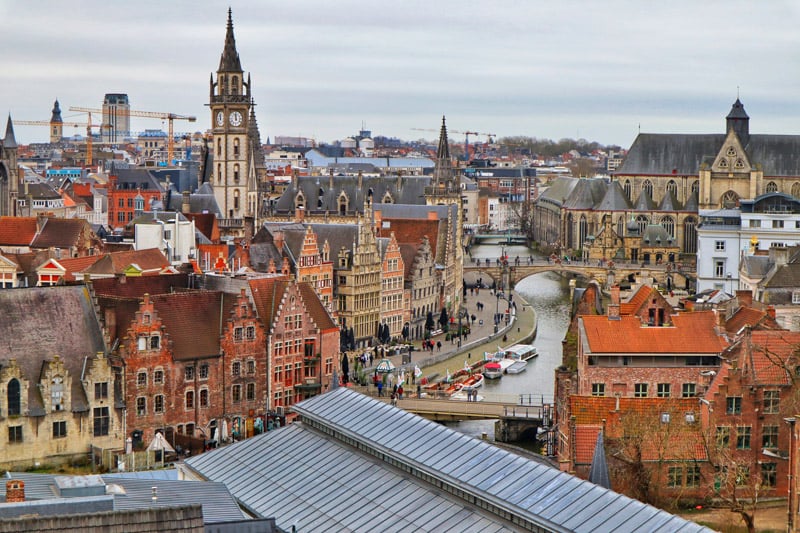
I keep telling friends that Ghent is the Belgian city to visit if you’ve already seen Bruges and want somewhere that feels lived-in rather than staged. It has the same fairytale canals and medieval towers, but a huge student population keeps the bars full and the prices sane. Without a doubt, I rank it among the prettiest places in Belgium.
On your weekend visit, I recommend starting at Gravensteen Castle in the centre. Then, walk to Werregarenstraat, the graffiti alley locals repaint constantly, which looks different every time I go. Duck into St Bavo’s Cathedral for the Van Eyck altarpiece, one of the most important paintings in Europe, before ending the day with a canal cruise as the Graslei quays light up. For dinner, head to Patershol, the oldest quarter, where Vier Tafels does a proper Gentse waterzooi (the creamy local stew you should order at least once).
If you can time it, come for the Gentse Feesten. It’s a ten-day street festival that takes over the city every July, when the squares fill with free concerts and the centre turns into one long party. Most routes land at Brussels Airport (BRU), a 30-minute direct train from the centre. Compare which airlines fly into Brussels before you book and check Charleroi (CRL) for budget Ryanair flights from London, Milan, and Barcelona.
Insider Tips
For a comfortable base with a view, book Van der Valk Hotel Gent and head up to its 10th-floor Skybar at sunset. It’s a short ride from the centre. Pick up a CityCard Ghent for free transport plus museum entry and a canal tour.
2. Tartu, Estonia
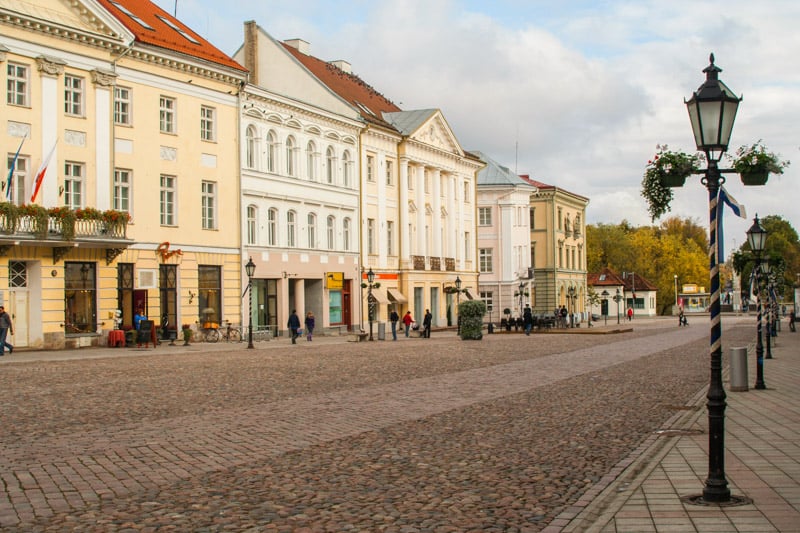
Tartu is Estonia’s second city, and it feels like Tallinn’s brainy, laid-back cousin. Home to the country’s oldest university, it runs on student energy, with bookshops that double as bars, giant public saunas, and quirky sculptures scattered across town. If you like cities that reward wandering over ticking off sights, this is one of my favourite under-the-radar spots in the Baltics.
✈️ How I Fly for a Fraction of the Price (Even Business Class)
Airfare keeps climbing, but I almost never pay full price. Going.com emails me roundtrips to Europe for under $350. With Elite, you’ll even see business class to Europe for ~$1,700 (deals you won’t find on Google Flights).
Planning a big trip? Elite members save up to $2,000 on a single international business-class ticket. I’ve seen nonstop biz to Scotland for $1,250.
👉 Try Going Elite free for 14 days. Cancel anytime, and use code JON25 for 25% off.
Just want the cheap economy deals? Start free in 10 seconds, no credit card required.
It’s the best money-saving tool I’ve used in 10+ years of travel.
👉 Try Going Elite free →Start on Toome Hill, the park of cathedral ruins and footbridges right above the centre, then drop into the AHHAA Science Centre, the largest hands-on science museum in the Baltics. Walk 15 minutes south to Karlova, a district of painted wooden houses and cafés that most visitors skip entirely. For dinner, book Humal, a local-favourite gastropub pouring Estonian craft beer next to a sharp pan-European menu.
Most people fly into Tallinn, then take the two-and-a-half-hour coach south. I’d recommend Lux Express, which runs the route most reliably with wifi, power sockets, and a screen at every seat. You can also come up from Riga on the same operator if you’re pairing Tartu with Latvia. It’s an easy, cheap ride either way, and the bus terminal sits a short walk from the old town.
My Hotel Recommendation
Stay on or near Rüütli Street, the pedestrian strip lined with pubs and restaurants right by the old town. Hotel SOHO sits right on it and is a quick walk to almost everything. You’ll barely need the bus once you’ve arrived!
3. Wrocław, Poland
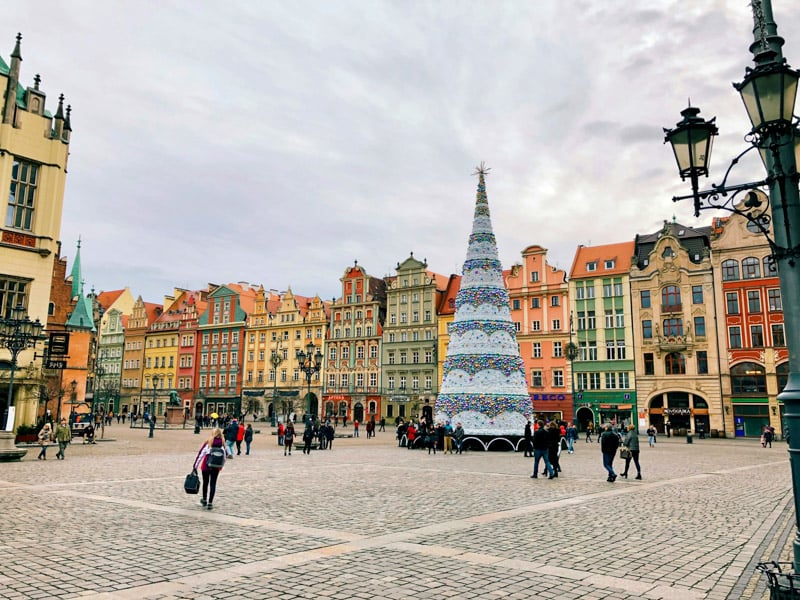
I never understand why Wrocław isn’t talked about more for a weekend break in Europe. It delivers everything Kraków does with a fraction of the crowds. Tucked into western Poland, it’s built around one of the prettiest market squares in the country, laced with river islands and bridges that have earned it the nickname “the Venice of the north.” It’s also one of the prettiest destinations in Poland and, for my money, one of the most underrated cities in Europe.
Base yourself on Rynek, the Market Square, and start by hunting the city’s famous bronze gnomes, tiny statues tucked into kerbs and doorways that now number close to a thousand citywide. For lunch, eat baked pierogi at Pierogarnia Stary Młyn just off the square, then have a proper sit-down dinner at Piwnica Świdnicka, one of the oldest restaurants in Europe, in the cellar beneath the Town Hall. When you need a break from wandering, Hydropolis is an impressive water museum, and Cathedral Island is the spot to be at golden hour.
Getting here is easy and cheap, with flights into Wrocław (WRO) from London, Amsterdam, Frankfurt, and Oslo often landing under $100 roundtrip. The old town is compact and flat, easy to cover entirely on foot across a weekend. It adds up to affordable rooms, excellent food, and no crowds, exactly what you want from a city break.
Where to Stay
For a splurge that still feels good value by Polish prices, book Hotel Altus Palace, a five-star set inside a restored 19th-century palace with its own spa. It’s a seven-minute walk from the Market Square, close enough to wander home after dinner but tucked beside a quiet garden.
4. Budapest, Hungary
Budapest is one of the few cities where I plan the whole weekend around a bath and a bar crawl, and both live up to it. I start at Fisherman’s Bastion on the Buda side early, before 9am, because by mid-morning the terraces are packed and the Parliament view across the river loses all its magic. Then I cross to Pest, which is flatter, livelier, and where you’ll spend most of your time.
For the baths, my advice is to skip the Saturday-night Sparty unless you’re specifically after a pool rave with 2,000 other people, and it does sell out two to three weeks ahead if you want it. I’d rather visit Széchenyi first thing in the morning when it’s calm, or go to Rudas on a Friday night for the candle-lit rooftop tub over the Danube. Széchenyi runs around 11,900 forint on a 2026 weekday, and one heads-up is that Gellért is closed for renovation until 2028. Don’t build a trip around it like the old blogs tell you to!
Everyone will point you to Szimpla Kert, and you should go, but the trick is arriving before 8pm or on a weeknight, because the Saturday line hits 45 minutes. Order a beer inside for a couple of euros rather than at the tourist bars near Váci utca, where the same drink costs triple. That combination of dirt-cheap nights out, morning soaks, and a beautiful city is exactly why Budapest keeps it near the top of my European weekend list.
My Recommended Cruise
For the evening, I recommend this 90-minute Budapest sparkling wine and spritz Danube cruise, which comes with unlimited Törley sparkling wine, spritzers, and beer plus an English audio guide. Time it for sunset, head up to the open deck, and watch Parliament and the Chain Bridge light up as you loop back.

5. Porto, Portugal
Porto is one of my favorite cities in Europe for a slow weekend trip, built along the Douro in a tumble of tiled facades and steep lanes. I always start in the Ribeira, the riverside old town, and let myself get lost in the narrow streets before landing at a café terrace for a coffee. Come here in spring or early fall and you’ll get the warm light without the peak summer crowds.
Livraria Lello is the famous bookstore in Porto, and it’s genuinely stunning. I’d still recommend visiting, but be aware there’s now a €5 entry fee that you can redeem against a book. My advice is to book the timed ticket ahead and go right at opening, because by midday the queue swallows an hour of your day. For lunch, get the Francesinha at Café Santiago, Porto’s messy, glorious signature sandwich, and split one if you’re not starving – it’s enormous!
The real magic is across the Dom Luís I Bridge in Vila Nova de Gaia, where the port wine cellars line the far bank of the river. I’d do a tasting at one of the lodges in the late afternoon, then walk back over the bridge as the sun drops and the whole Ribeira lights up. It’s one of the coolest things to do in Porto, and it costs almost nothing beyond the wine.
My Recommended Tasting
Of all the Gaia lodges, I’d book Taylor’s Port cellar tour and tasting. It’s about €25 for a 90-minute self-guided visit. It never sells out like the fixed-slot tours, and the tasting garden with roaming peacocks and views back over Porto is the prettiest spot in Gaia for a glass.

6. Edinburgh, Scotland
Edinburgh is one of my favourite weekend cities in Europe, and two days is all you need to see the best of it. Everything sits within a 20-minute walk, the castle, the Royal Mile, the Old Town, all packed onto a hill below an extinct volcano. I recommend visiting in spring or September to skip the August Fringe, when the crowds triple and hotel prices shoot up with them.
I always give Edinburgh Castle a morning, but book online in advance, because it sells out and the walk-up queue is painfully long. My favourite thing here is completely free though, the hike up Arthur’s Seat, the volcano in Holyrood Park, which takes about an hour return and gives you the best view in the city. Walk the Royal Mile early before the tour groups arrive, then explore the little closes running off it, some of the most atmospheric things to do in Edinburgh.
In the evening, head to the Grassmarket and Victoria Street, where the whisky bars and folk-music pubs are just a few minutes from wherever you’re staying. Order haggis, neeps and tatties at least once, because done well it’s delicious! Two nights is plenty for the city, and if you have a third, take the train to South Queensferry or head north into the Highlands.
Where I’d Stay
For a modern room and a quieter night than the Royal Mile, I’d book voco Edinburgh Haymarket, over on the West End. It’s a 10-minute walk to Princes Street and about 20 to the castle, with a tram stop outside that runs straight to the airport, which makes arriving and leaving painless.

7. Barcelona, Spain
Barcelona is a rare city where you can see world-class architecture in the morning and be on the beach by afternoon. The Sagrada Família is the reason most people come, and 2026 is a landmark year for it. The central Tower of Jesus Christ was completed in February, which makes it the tallest church in the world at 172.5 metres. I love that Gaudí deliberately set it half a metre below Barcelona’s Montjuïc hill, because he felt no human creation should stand taller than the work of nature.
Book your Sagrada Família ticket weeks ahead. 2026 is also the centenary of Gaudí’s death and the crowds are bigger than ever, with the old two-week booking window no longer enough. Beyond it, I’d spend a morning at Park Güell for the mosaics and the city view, then wander the Gothic Quarter’s tangle of medieval lanes with a stop for tapas. These are some of my favourite things to do in Barcelona whenever I’m back.
When you need a break from sightseeing, Barceloneta beach is a 15-minute metro ride from the centre for a swim and a seafood lunch by the water. Come in late spring or early fall for warm weather without the peak-summer squeeze, and give it two or three days to do it justice. It’s one of the most beautiful places in Spain, and 2026 is a special time to see it.
Book Well Ahead
With 2026 being the Gaudí centenary, Sagrada Família tickets are selling out faster than ever. Reserve six to eight weeks out for the time slot you want, and note the interior tower viewing platform doesn’t open to visitors until 2027.

8. Ljubljana, Slovenia
The city is small enough to see in a day, which is what makes it such an easy weekend. Start at Prešeren Square, browse the riverside Central Market for local cheese and honey, then book a table at Špajza in the old town for Slovenian cooking like slow-cooked veal and štruklji dumplings. End the evening with a drink at the Nebotičnik rooftop bar, which has the best view over the rooftops in town.
The real reason to base yourself here is the day trip. Lake Bled, the fairytale island church and cliffside castle you’ve seen on every postcard, is just over an hour away on a bus that runs from the central station for a few euros. Spend your second day walking the lake loop and rowing out to the island, and you’ll see why I rate this corner of Slovenia so highly.
Want more of the country beyond the capital? Here are the most beautiful places to visit in Slovenia.

9. Bologna, Italy
If you plan your weekends around what’s on the plate, Bologna is the best eating city in Italy. What’s more, t stays refreshingly free of the crowds you’ll fight in Florence or Rome. This is the home of tagliatelle al ragù, and one tip that marks you out as a local, never call it “spaghetti bolognese” – that dish doesn’t actually exist here! Come for two days, eat your way through the Emilia-Romagna region, and you’ll understand why Italians call this city “la grassa,” the fat one.
Start in the Quadrilatero, the tangle of medieval market lanes just off Piazza Maggiore, where stalls spill over with mortadella, parmigiano, and fresh pasta. For the ragù itself, I’d book a table at Trattoria da Me a few weeks ahead, or arrive right at opening for a walk-in seat at the no-reservations Osteria dell’Orsa. In between, wander the porticoes, 38km of covered walkways that make the whole centre a joy even in the rain.
Bologna is small, flat, and made for walking. You don’t need a car, and the ZTL cameras in the old town will fine you weeks after you’ve flown home. It’s also one of the easiest Italian cities to reach on the cheap flights to Italy that land at its airport from across Europe. Give it a full weekend, and if you’ve a third day, the food capitals of Modena and Parma are a short train ride away.
Book Your Table
The best trattorias fill up fast. Reserve the sit-down spots like Trattoria da Me or Osteria Bottega a couple of weeks out. For a great walk-in, turn up at Osteria dell’Orsa right at its 12:30 opening, before the lunchtime queue builds.

10. Prague, Czech Republic
Prague gives you more postcard per pound than almost anywhere in Europe, which is what makes it such a great-value weekend. You get Gothic spires, a hilltop castle, and a medieval bridge over the river, all for prices that run 30 to 40% below Paris or Amsterdam. I’d come in spring or early autumn to catch the mild weather and dodge the peak-summer crowds on the Old Town’s narrow lanes.
Cross the Charles Bridge first thing in the morning, ideally before 8am. By midday, it’s a shoulder-to-shoulder scrum of tour groups and caricature artists. Give Prague Castle a couple of hours – it’s the largest castle complex in the world, then wander down into Malá Strana, the quieter Lesser Town below it. One tip that’ll save you money: avoid the restaurants right on the Old Town Square, since walking two streets back gets you the same Czech meal for half the price.
Prague is a brilliant beer city too. Skip the tourist bars and drink where locals do; a proper Czech pilsner runs barely a couple of euros. Give it three days for a first visit, and if you’ve a fourth, take the train out to the eerie bone church at Kutná Hora or the storybook town of Český Krumlov.
Book This Hotel
For a central base that keeps everything walkable, I recommend the Michelangelo Grand Hotel, a five-minute walk from Wenceslas Square and ten from the Old Town. It sits on a quiet street, which means no late-night noise, with two metro stops nearby for reaching the castle without the uphill walk.

11. Lisbon, Portugal
Lisbon is the sunniest capital in Western Europe. Its mix of pastel hills, rattling trams, and riverside energy makes it a brilliant weekend away. Where Porto is a cosy retreat, Lisbon is the louder, faster counterpart that keeps going well past midnight, which is why it’s such a hit with younger travellers. Come in spring or early autumn for warm days without the summer crowds on the hills.
Start in Belém for the Jerónimos Monastery and the original pastéis de belém, then work back toward the centre through the tiled lanes of Alfama, the city’s oldest quarter. The famous Tram 28 rattles through here, but ride it early and keep a hand on your pockets, because it’s as popular with pickpockets as it is with tourists. For the best pastel de nata in town, I’d head to Manteigaria, ideally eaten warm with a dusting of cinnamon.
By evening, the Bairro Alto comes alive with tiny bars spilling onto the streets. LX Factory is the spot for a more creative crowd of restaurants and design shops. Wear proper shoes – the polished cobbles get slippery on the hills. Lisbon is cheap to reach on the budget airlines flying into the city, and two or three days is enough to fall for it.
Skip the Crowds
Everyone piles onto Tram 28 for the ride up to São Jorge Castle, but locals take Bus 737 for the same route with air conditioning and far fewer pickpockets. If you do want the classic tram, board at the Martim Moniz terminus first thing to get a seat.

12. Bratislava, Slovakia
Bratislava is one of the most underrated capitals in Europe, and one of the cheapest. The old town is tiny and entirely walkable, a compact maze of pastel baroque houses, pavement cafés, and a hilltop castle looking out over the Danube. It’s noticeably kinder on the wallet than nearby Vienna or Prague, so it’s an easy pick if you’re chasing a budget-friendly weekend break in Europe.
Spend your first day wandering the old town, climbing to Bratislava Castle for the river view, and eating where locals go. Skip the photo-menu spots on the main square and head one street back to Laurinská. Try bryndzové halušky, the national dish of potato dumplings with sheep’s cheese and bacon, ideally at a spot like the Slovak Pub or a brewery restaurant. It’s hearty, cheap, and delicious.
The clever move is to use Bratislava as a base and pair it with Vienna, which is barely an hour away by frequent trains, or a scenic Danube boat in summer. Closer still is Devín Castle, a dramatic hilltop ruin where the Danube and Morava rivers meet, an easy half-day out. Two days covers Bratislava comfortably, with a third for whichever trip you fancy.
Eat Like a Local
Anything on the main square with a photo menu is aimed at tourists, and the better food sits one street back on Laurinská and around Franciscan Square. Order the bryndzové halušky and a garlic soup in a bread bowl, and you’ll eat well for a fraction of Vienna prices.

13. Amsterdam, Netherlands
Amsterdam packs world-class museums, looping canals, and a famously relaxed atmosphere into a city you can cross by bike in 20 minutes. It’s an easy weekend to love, though a couple of things are worth sorting before you go, since the big sights now run on strict advance booking. Come in spring for the tulips or early autumn for mild weather and thinner crowds.
The one ticket to plan around is the Anne Frank House, the hardest booking in the city. Tickets are released online every Tuesday for the date six weeks later and gone within minutes. Book the Van Gogh Museum ahead too, since it’s timed-entry year-round, and aim for a 9am slot at either to beat the queues. Beyond the museums, the best thing to do is simply rent a bike and ride the canal ring. Just stay out of the red bike lanes unless you’re actually cycling, because locals will let you know.
Evenings are best spent in the Jordaan’s brown cafés or across in De Pijp, which is also where I’d stay for better prices than the canal belt. One heads-up for your budget, Amsterdam’s tourist tax is among the highest in Europe at up to €12.50 a night, and it’s never included in the room price you see online. Two or three days is plenty, and it’s a great city for a weekend in your twenties.
My Restaurant Recommendation
For a proper taste of Dutch home cooking, book a table at Moeders in the Jordaan, where the walls are covered floor-to-ceiling in photos of customers’ mothers. Order the stamppot or the Dutch meatballs, and reserve ahead, because this tiny local favourite fills up every night.

14. Copenhagen, Denmark
Copenhagen is the Scandinavian city that does effortless cool better than anywhere. You’ll find clean design, cycle lanes, and waterfront hangouts. It’s an easy, walkable weekend, best enjoyed from spring to early autumn when the outdoor terraces and harbour baths are open. Start at the colourful Nyhavn harbour for the photo, then rent a bike – this is one of the most cycle-friendly cities on earth.
Copenhagen has quietly become one of the best food cities in Europe, and you don’t need a three-star budget to eat well here. The flagship is Geranium, a three-Michelin-starred restaurant with park views that topped the World’s 50 Best list. The wider food scene is packed with more casual spots opened by its alumni. For something low-key, grab smørrebrød at the Torvehallerne food market or a legendary cheeseburger from Gasoline Grill.
Beyond eating, give an evening to Tivoli Gardens, one of the world’s oldest amusement parks and magical after dark. Then, spend a morning on Danish design at the Design Museum. Copenhagen isn’t cheap, so a Copenhagen Card that bundles transport and free entry to most attractions pays for itself fast. Two or three days is all you need to see why it tops so many quality-of-life lists.
Getting Into Town
Skip the taxi line when you land. The driverless M2 metro runs straight from the airport terminal into the centre in about 13 minutes for 30 DKK, roughly a tenth of the cab fare. It drops you right by Nyhavn and Kongens Nytorv, and runs around the clock if you’re arriving late.

15. Split, Croatia
Of all the cities in Europe I’d pick for a weekend by the sea, Split is the one that does history and beach life in equal measure. Its whole old town sits inside Diocletian’s Palace, a 1,700-year-old Roman complex that never became a museum. You’re wandering through lived-in streets, cafés, and apartments built into the ancient walls, the cellars even doubled as a Game of Thrones set. I’d come in May, June, or September, when the sea’s warm but the cruise crowds haven’t peaked.
Give your first day to the palace, climbing the bell tower of St Domnius for the view and walking the palm-lined Riva. My tip is to explore it early or late. By midday, the day-trippers pour in. Then, hike up Marjan Hill at golden hour for the best sunset in the city. For dinner, I’d skip the tourist tables inside the walls and find a proper konoba like Fetivi for Dalmatian braised beef and fresh seafood.
The real draw is using Split as your launch pad to the islands. Everyone piles onto Hvar, but the quieter islands are where I’d spend my day. Take the catamaran to Brač for the Golden Horn beach, or Vis if you want somewhere even more low-key, and book your seats a few days ahead in peak summer.
Getting There
Split’s airport sits 24km out in Kaštela. The easiest way in is the shuttle bus (around €5), which drops you at the main station right by the old town and ferry port. The shuttle stops running late – line up a taxi or transfer if you land after 11pm.


Global Viewpoint is a personal blog. All content is for informational and entertainment purposes only and does not constitute professional financial, medical, or legal advice.