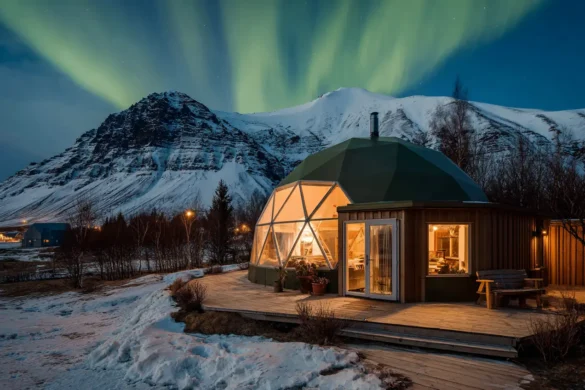
If you’re craving a countryside escape that’s both enchanting and Insta-worthy, the Cotswolds is calling your name. 🌿✨ Think rolling hills, charming villages with honey-colored stone cottages, and streets lined with quaint shops and cozy cafés. Whether you’re strolling through lush gardens, exploring historic castles, or simply soaking in the serene vibes, this is the perfect spot for a getaway that feels both adventurous and relaxing.
The Cotswolds offers a breath of fresh air from the hustle and bustle, and trust me, it’s full of hidden gems just waiting to be discovered. Ready to explore one of England’s most picturesque regions? Let’s dive into the 15 absolutely beautiful places in the Cotswolds you NEED to visit! 🌸🚶♀️

The Most Beautiful Places to Visit in Cotswolds
Ready to explore the most beautiful spots in the Cotswolds? Nestled in the rolling hills of southwest England, this area offers stunning views for every type of traveler. From charming villages to peaceful nature escapes, the Cotswolds has something for everyone. Here are the must-see locations you won’t want to miss:
Short on time or based in London? You can string the prettiest villages together in one day on this full-day Cotswolds villages tour.
1. Castle Combe
Honestly, Castle Combe really lives up to its reputation as England’s prettiest village – and I’ve seen the crowds to prove it. Even at 9am on a Saturday, coach loads of tourists are already flooding in, so get here early if you want those Instagram shots without people in them. The £1.10 parking at the top car park is pretty reasonable, but it’s a solid 10-15 minute walk down into the village on a narrow road where you’ll be dodging cars and other visitors.
The village itself is absolutely magical though. I spent ages wandering the single street lined with honey-colored cottages, and the 13th-century St. Andrew’s Church with its faceless medieval clock is genuinely fascinating – it’s supposedly one of the oldest working clocks in England. The Market Cross in the village center is where cloth merchants sold their wares back in the 14th century, and now it’s the perfect spot to grab a pint at The Castle Inn.
What really sets Castle Combe apart is how completely untouched it feels. Since the village was reconstructed in 1906, there’s been no new building work at all. You can do the 3-mile circular walk to Nettleton Shrub if you want to escape the crowds, or just enjoy people-watching from the ancient stone bridge. Film crews love this place – it’s been in “War Horse,” “Stardust,” and loads of period dramas. Just remember that larger vehicles are banned to preserve the village character, which is probably why it’s stayed so perfect.

2. Lower Slaughter
Lower Slaughter is where you go when you want pure Cotswolds magic without the tourist chaos. The name sounds awful until you learn it comes from the Old English “slohtre” meaning muddy place – which it definitely isn’t now. The River Eye flows right through the village center, and these tiny stone footbridges cross it everywhere, creating the most ridiculous photo opportunities you’ve ever seen.
I love that this village has basically been frozen in time since 1906 – no new buildings allowed. The red brick Old Mill stands out completely from all the honey-colored stone cottages, and that waterwheel is still turning just like it has for centuries. The Old Mill changed hands in 2024 and is now undergoing a major renovation under new ownership, so the museum, gift shop and ice cream parlour that ran here for decades are closed with no confirmed reopening date. For now, a coffee kiosk by the entrance still serves organic coffee, pastries and ice cream, so you can pause by the water even though the mill interior isn’t open to explore.
The walk from Lower Slaughter to Upper Slaughter is only about 20 minutes and honestly one of the most romantic strolls in England. I always tell people to park in nearby villages and walk in because parking here is basically impossible – there are maybe a few spots on Copsehill Road but good luck with that. The Slaughters Manor House is ridiculously fancy if you want to splash out, but even if you can’t afford to stay, pop in for drinks to see how the other half lives. This village proves that sometimes the best attractions are just places to slow down and soak in the atmosphere.
- Read Next: Best Places to Live in England

3. Bourton on the Water
Everyone calls Bourton-on-the-Water the “Venice of the Cotswolds,” and while that’s a bit dramatic, those five stone bridges over the River Windrush are pretty spectacular. Just be warned – this place gets absolutely mobbed, especially on weekends. I’ve seen families set up entire picnic operations along the riverbank while kids use it as their personal splash pad.
The Model Village is genuinely brilliant though – it’s a perfect 1:9 scale replica of the village itself, built in the 1930s using the same local stone. For £5, you get to see the whole place in miniature, including a tiny model of the model village inside the model village (yes, really). Birdland Park has over 500 birds including penguins that actually thrive here, plus they’ve added a zip line recently that the kids love.
What I appreciate about Bourton is that it’s still a real working village with 4,000 residents, not just a tourist attraction. The Cotswold Motoring Museum has “Brum” the little yellow car from TV, which shows my age. For the best experience, get here between 7:30-8:30am before the tour buses arrive, or stay overnight so you can enjoy the village in the evening when all the day-trippers have gone home. The riverside pubs are perfect for fish and chips while watching the world go by. December is magical here with Christmas lights reflecting in the water, though you’ll definitely need layers.
- Read Next: Beautiful Places in Europe

4. Bradford on Avon
Bradford-on-Avon is brilliant because it’s got all the Cotswolds charm but without the crazy crowds since it’s technically in Wiltshire. The Saxon Church of St. Laurence is an absolute gem – it dates to around 705 AD and was literally lost for centuries, hidden among cottages until workers rediscovered it in 1856. You can go inside and the atmosphere is incredible, plus those carved flying angels high up on the walls are worth the visit alone.
The Town Bridge with its tiny chapel in the middle is one of only a few surviving bridge chapels in Britain. It was originally for pilgrims traveling between Malmesbury and Glastonbury, then became the town lock-up where they’d stick drunk locals overnight. Now the Bridge Tea Rooms serve award-winning cream teas with staff in Victorian dress – bit touristy but the Earl Grey is properly brewed.
✈️ My #1 Tip for Cheap 2026 Flights:
It’s summer, so flight prices are climbing fast - but you don't have to pay them. I’m currently seeing roundtrips to Europe for under $350 (deals you won’t find on Google Flights).
Step 1: Join Going.com's Free Plan here . It takes 10 seconds and requires no credit card.
Step 2: If you're doing a big trip this year, grab the 14-day free trial of Premium. You can even use my code JON25 for 25% off.
Seriously, this is the single best money-saving tool I’ve used in 10+ years.
👉 Send me cheap 2026 flightsWhat I love most is walking the Kennet and Avon Canal towpath where narrowboats chug past at the most relaxing pace imaginable. The Tithe Barn is massive – over 50 meters long and free to visit through English Heritage. The Shambles is the prettiest shopping street with the town’s only timber-framed building, and you’re only 12 minutes by train from Bath if you want to explore further. The hill above town is dotted with former weavers’ cottages that are now gorgeous homes, giving you that classic Cotswolds view everyone’s after.

5. Chipping Norton
“Chippy” as locals call it, is where you experience actual Cotswold life instead of just looking at it. This isn’t a museum village – it’s a proper market town where farmers still discuss crops over pints and locals shop for necessities, not just souvenirs. Wednesday is market day when the town center fills with producers whose families have worked these fields for generations.
The Theatre is genuinely special – it’s housed in a converted Salvation Army citadel that puts you ridiculously close to world-class productions. I’ve seen some brilliant shows here that you’d never expect in a town this size. The 17th-century Almshouses are beautiful examples of historic charity architecture, and St. Mary’s Church has this distinctive hexagonal porch that draws architecture buffs.
The High Street has proper independent shops selling actual useful things alongside the antique hunters’ paradise that Chippy is famous for. The Crown & Cushion does the best full English breakfast in town in their centuries-old dining room – perfect fuel before exploring. In September, the Chipping Norton Literary Festival brings amazing authors to this small town. This is where you understand why people actually choose to live in the Cotswolds rather than just visit. It’s got all the honey-stone beauty but with real community spirit and none of the tourist-trap feeling.
- Explore more of Oxfordshire: 12 Stunning Places to Visit in Oxfordshire
- You’ll also enjoy: Why Oxford is a Must-Visit Destination

6. Stroud
Stroud is the creative heart of the Cotswolds and completely different from everywhere else. The Saturday Farmers’ Market is absolutely incredible – over 50 local producers selling everything from sourdough to small-batch gin under colorful canopies while live music fills the air. I always stock up on proper local cheese here and coffee that’s actually worth drinking.
The former textile mills around John Street now house working artists’ studios where you can watch craftspeople at work. During the Fringe Festival in July, performances pop up in the most unexpected spaces throughout town – I’ve seen brilliant shows in old mills and hidden courtyards. The Five Valleys rise dramatically from town, offering spectacular hiking with rare wildflowers on Selsley Common.
What makes Stroud special is its proper bohemian vibe. The artistic quarter isn’t just for show – these are real working artists creating amazing stuff. The Imperial Hotel often has local artists sketching in their garden at breakfast, which gives you an idea of the atmosphere here. The award-winning market is genuinely the best in the Cotswolds, and you’ll find producers here who’ve been perfecting their craft for decades. It’s where young families and creative types actually live, not just visit, which gives the whole place an energy that’s missing from some of the more touristy villages.

7. Cirencester
Cirencester was the second-largest Roman settlement in Britain after London, and you can still feel that importance today. The Corinium Museum has some of the most stunning Roman mosaics I’ve ever seen – they’re so intricate you’ll be staring at them for ages trying to figure out how they did it 2,000 years ago.
The Market Square buzzes twice weekly continuing traditions that date back to medieval times, and the massive Parish Church towers over everything with Gothic architecture that stops you in your tracks. The Roman Amphitheatre is just beyond the town center where ancient spectators once cheered gladiatorial contests – now it’s a peaceful spot for picnics.
Abbey Grounds provides the perfect green space to decompress after exploring, and the pubs here serve properly hearty local fare that hits the spot after days of village-hopping. Cirencester works brilliantly as your base camp for exploring the wider Cotswolds – it’s got all the facilities you need plus easy access to everywhere else. The Kings Head Hotel is a historic coaching inn that’s been updated with modern luxuries but keeps all its character. December brings a magical Christmas market that transforms the ancient streets, and you can actually find parking here unlike some of the smaller villages.
- Read next: Unique Restaurants in the Cotswolds

8. Stow-on-the-Wold
Stow-on-the-Wold sits on the highest ground in the Cotswolds at 800 feet, and those views across the countryside are spectacular. The Market Square has hosted commerce for over 800 years and is now lined with brilliant antique shops and galleries showcasing local artists. The streets were literally designed for sheep drives centuries ago, which explains why they’re so wide.
The Porch House claims to be England’s oldest inn dating to 947 AD, and their traditional English fare is honestly some of the best comfort food I’ve had. The twice-monthly farmers’ market is worth timing your visit for – proper local producers displaying the region’s finest food and crafts. Don’t miss the magical doorway at St. Edward’s Church flanked by ancient yew trees that inspired fantasy writers.
What I love about Stow is how it serves as the perfect hub for car-free exploration – walking paths connect it to many nearby villages. The antique hunting here is legendary, and you’ll find everything from Georgian furniture to vintage jewelry. The Porch House coffee is surprisingly good for such an ancient building, and the whole town has this windswept, romantic feel that makes you want to bundle up and explore for hours. April to June is perfect for spring blooms, while September and October give you those golden autumn colors that look incredible against all that honey-colored stone.
- Visit the world’s most famous university city: 10 Reasons to Visit Oxford This Year

9. Slad
Slad is pure literary magic – this tiny single-street village was immortalized in Laurie Lee’s “Cider with Rosie” and has barely changed since his childhood a century ago. The Woolpack Inn is where Lee drank daily, and locals still gather here to exchange news over perfectly kept ales in what feels like the most authentic pub experience in the Cotswolds.
The 5-mile Laurie Lee Wildlife Way has poetry posts featuring his vivid descriptions of the valley, and walking it gives you this incredible connection to his writing. This dramatic valley setting is completely untouristy – no souvenir shops or tour buses, just genuine rural life continuing as it has for generations.
I stayed in the basic rooms above The Woolpack and loved the breakfast conversations with locals who’ve lived here forever. May to July is spectacular when wildflowers carpet the valley floor, and October to November brings those atmospheric misty mornings that Lee wrote about so beautifully. The walking here is fantastic, with paths leading up the steep valley sides for views that haven’t changed in decades. This is what the Cotswolds was like before tourism took over – peaceful, authentic, and absolutely beautiful. You’ll have the whole place almost to yourself, which is increasingly rare in this part of England.

10. Painswick
They call Painswick the “Queen of the Cotswolds” and honestly, the silver-stone Georgian architecture is pretty much perfect. The Painswick Rococo Garden is England’s only complete surviving rococo garden from the 1740s, and February to March is magical when carpets of snowdrops bloom throughout the elaborate pleasure grounds.
St. Mary’s Church has exactly 99 meticulously trimmed yew trees surrounding it – local legend says the devil destroys any 100th tree planted. Walking Bisley Street reveals pristine weavers’ cottages that look like they’ve been frozen in architectural amber. The views from Painswick Beacon on clear days stretch all the way to Wales.
The Painswick Hotel offers Georgian elegance with valley views and some of the most comfortable beds I’ve encountered in the Cotswolds. The village is compact enough to explore in a couple of hours, but the Rococo Garden alone deserves a full morning, especially during summer when the garden reaches peak bloom. The breakfast at The Painswick is worth waking up for, and you can walk off those full English breakfasts on the network of footpaths leading into the surrounding countryside. June to July gives you the full garden spectacle, while winter visits offer a more contemplative experience among the carefully designed landscape features.

11. Burford
Burford‘s sloping High Street is one of those views that stops first-time visitors dead in their tracks. This “Gateway to the Cotswolds” showcases medieval merchants’ houses that are now housing antique shops and galleries perfect for treasure hunting. St. John the Baptist Church tells fascinating stories through its merchant memorials and marks where Cromwell executed the Levellers in 1649.
The narrow alleyways branching off the main street reveal hidden courtyards and gardens where I’ve spent hours just soaking in centuries of history. The Lamb Inn with its crooked floors and crackling fires is worth every penny for the 15th-century atmosphere – the staff actually remember your name, which is rare these days.
Burford connects easily to Oxford making it ideal for exploring the eastern Cotswolds. The gentle River Windrush flows nearby offering riverside walks through meadows filled with wildflowers in spring. April to June is perfect for garden blooms, while September gives you pleasant weather without the summer crowds. The hidden courtyards and gardens off the main street are where locals still hang out, giving you glimpses of real village life beyond the tourist trail. This is proper medieval architecture that wealthy wool traders built to show off their success, and it’s survived remarkably intact.
- Continue your Oxfordshire adventure: 12 Must-See Destinations in Oxfordshire
- You may also like: 10 Reasons Why Oxford is So Famous (& Why You Should Visit)

12. Bath
Bath works perfectly as your Cotswolds base even though it’s technically in Somerset. The Roman Baths are genuinely mind-blowing – sophisticated ancient engineering that’s still functioning 2,000 years later beneath magnificent vaulted ceilings. Don’t miss floating in the steamy rooftop pool at Thermae Bath Spa while gazing across the city skyline.

The Royal Crescent represents Georgian urban design at its absolute peak – that sweeping curve of honey-colored stone is architectural perfection. Bath Abbey has unique fan-vaulted ceilings, and the Jane Austen Centre celebrates her time living here. Pulteney Bridge is one of only four bridges in the world with shops built across its full span on both sides.

The Gainsborough Bath Spa is the only hotel with direct access to natural thermal waters, plus beds that make leaving nearly impossible. The compact center packs incredible attractions within walking distance, and you can easily day-trip to Cotswolds villages from here. May to September offers pleasant weather for outdoor dining, while December’s Christmas Market is absolutely magical with Victorian wooden chalets filling the Georgian streets. The local pubs serve regional specialties away from tourist crowds, and those thermal waters that drew Romans here 2,000 years ago are still the perfect way to end a day of Cotswolds exploring.
- Read next: Unique Restaurants in Bath
13. Bibury
Somehow Bibury didn’t make the original cut, which is wild given it’s the village everyone pictures when they think “Cotswolds.” Arlington Row, that line of impossibly photogenic 14th-century weavers’ cottages, is so iconic it’s literally been printed inside UK passports. Get there before 9am or you’ll be sharing the lane with tour buses and a dozen photographers angling for the exact same shot.
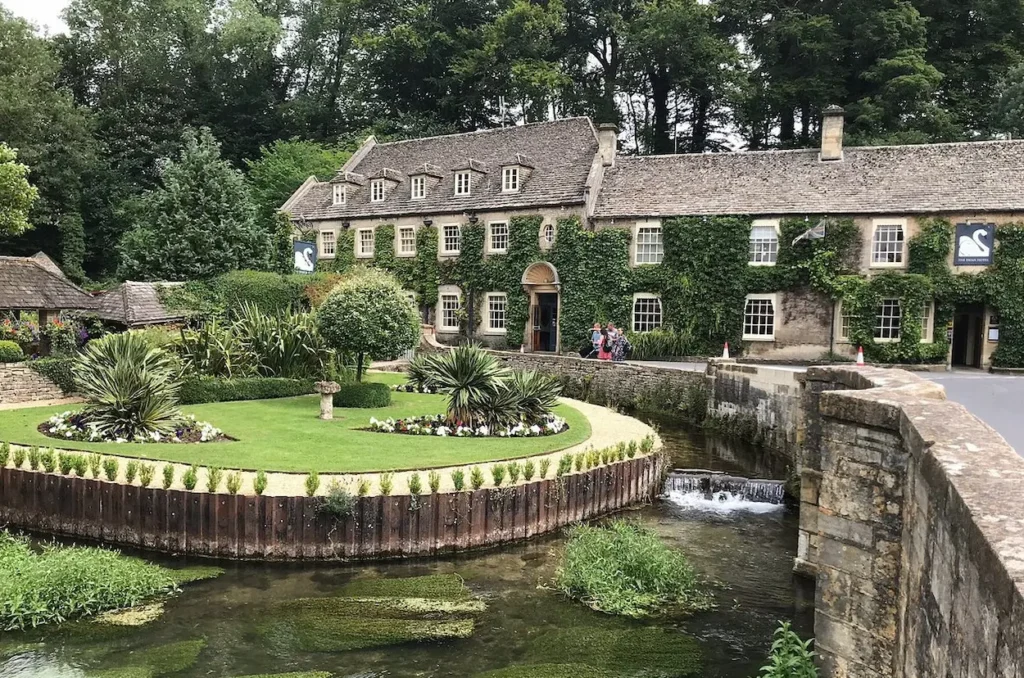
Beyond the famous row, the River Coln runs right through the middle of the village past the old Bibury Trout Farm, where you can feed the fish or catch your own. The Swan Hotel sits photogenically on the bend, and the water meadow opposite, Rack Isle, is where cloth was once hung to dry and now floods with wildflowers in spring.
It’s tiny, so an hour or two covers it, but it’s worth timing around the crowds. Park considerately, since the village has openly begged visitors to stop clogging the residential lanes, pair it with a quieter walk along the Coln, and you’ll see exactly why Bibury has been called the most beautiful village in England for over a century.
14. Broadway
They call Broadway the “Jewel of the Cotswolds,” and its wide, tree-lined High Street backed by honey-stone shopfronts makes the case better than I can. It’s more polished than gritty, with art galleries, tearooms, and the kind of antique shops where you’re afraid to breathe near the price tags, but it never tips into feeling fake.
The real reason to come is Broadway Tower, the hilltop folly on the second-highest point in the Cotswolds. Climb it on a clear day and you can supposedly see across 16 counties. William Morris loved this spot, and the surrounding parkland, complete with resident deer, makes a lovely picnic detour from the town below.
Base yourself here and you’re well placed for the northern Cotswolds. The Lygon Arms is the splashy historic coaching inn if you want to treat yourself, and the walk up to the tower along the Cotswold Way is the best way to earn your cream tea back in town. Spring and autumn are ideal; summer weekends fill up fast.
15. Chipping Campden
Chipping Campden might have the most beautiful High Street in the entire Cotswolds, a gentle curve of golden stone that’s barely changed since the wool merchants got rich here in the Middle Ages. The 17th-century Market Hall, with its worn stone arches, sits right in the middle like it’s been waiting for your camera.
This is a proper town with real history baked in. St James’ Church is one of the grand “wool churches” funded by medieval fleece money, and the ruined gateway of old Campden House hints at a manor burned during the Civil War. It’s also the northern trailhead of the Cotswold Way, so you’ll spot hikers fueling up before the 100-mile walk to Bath.
I love that Chipping Campden stays low-key despite being gorgeous. Browse the independent shops, grab lunch at a pub like The Eight Bells, and walk ten minutes to the thatched hamlet of Broad Campden for a quieter slice of the same magic. Come midweek and you’ll have those golden streets mostly to yourself.


Global Viewpoint is a personal blog. All content is for informational and entertainment purposes only and does not constitute professional financial, medical, or legal advice.