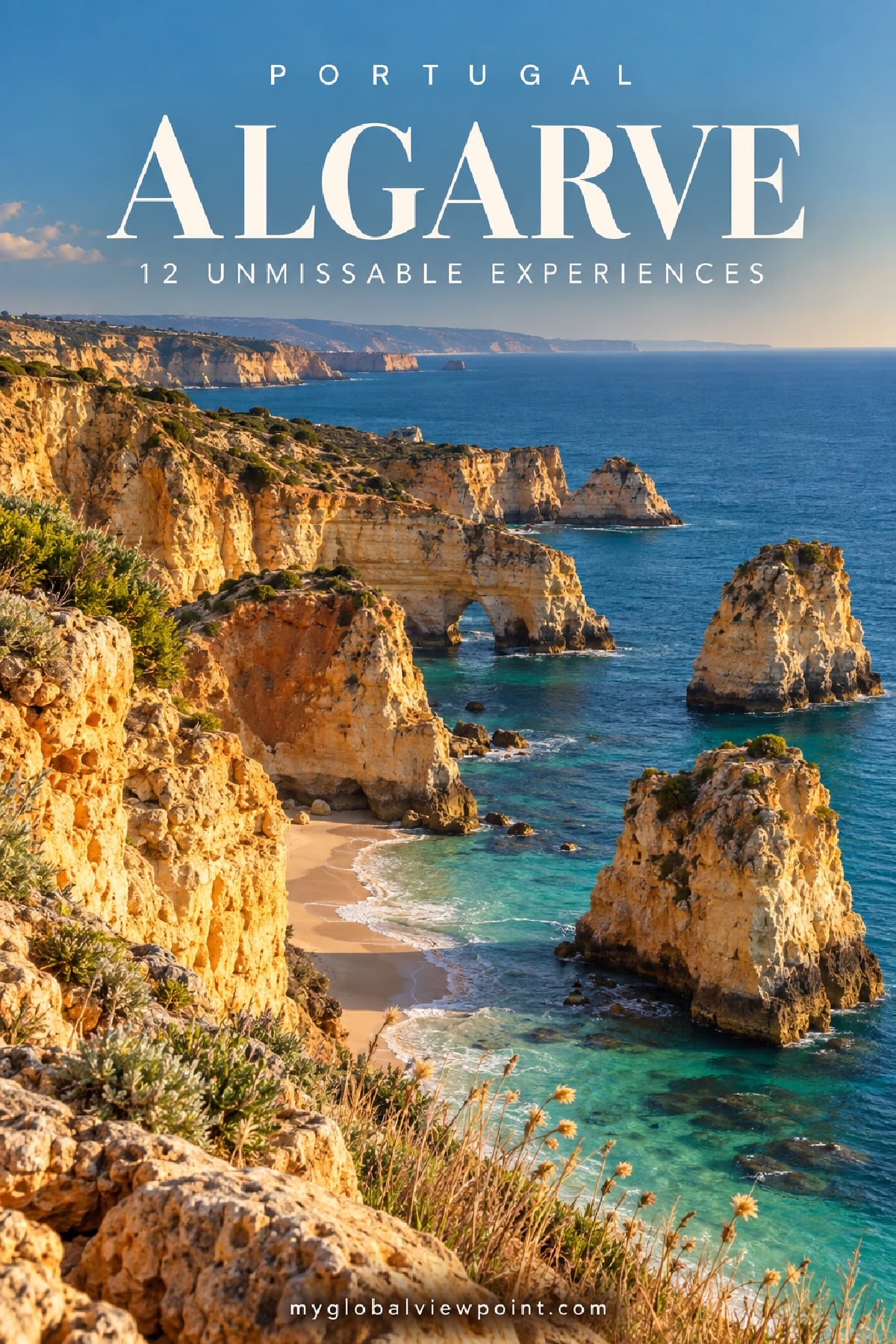
The Algarve packs a lot into about 155 km of coast. The western end near Cape St. Vincent is windswept and almost empty, the central stretch around Lagos and Albufeira is where the famous gold cliffs and sea caves are, and the eastern end past Tavira is flatter, quieter and far more Portuguese.
That spread matters more than most guides admit, because picking the wrong base means driving an hour each way to the things you came for. These are the 12 experiences I would actually build a trip around, with the access rules and practical details that have changed recently, starting with the one that catches almost everyone out at Benagil.
Before You Go: The Practical Bits
Coolest Things to Do in the Algarve
Visiting the Algarve? Wander through the cobbled streets of Lagos Old Town, marvel at the dramatic sea arches of Benagil Cave, or relax on the golden sands of Praia da Marinha. Explore the historic Moorish Castle in Silves and take in the views from Cape St. Vincent. Or, set sail along the stunning coastline for hidden beaches and grottoes. Pick two or three of these rather than all twelve. The coast is long enough that trying to see everything means spending the trip in the car.
I know the Algarve stretches across a huge coastline, so I mapped out all my favorite spots below. Save this map to your phone so you can easily navigate between the sea caves and seaside towns!
1. Benagil Caves
The Benagil Caves are one of the most breathtaking sights in the Algarve, famous for their massive sea cavern with a natural skylight. This stunning rock formation, carved by centuries of ocean waves, houses a hidden beach inside, where golden sand meets turquoise waters. I took a boat tour from Portimão, and the moment we entered the cave, the light pouring through the top created an unreal glow. The reflections on the water and the echo of waves against the rock walls make it an unforgettable experience.
One thing to get right before you plan this, because the rules changed and a lot of older guides have not caught up: you can no longer swim to the cave, and you cannot paddle in on your own kayak or SUP. The maritime authority in Portimão banned both in July 2024, and the fines are not trivial. The only legal way inside now is a licensed boat, kayak or SUP tour, and even then you are not allowed to step off onto the beach inside the cave.
That is less restrictive than it sounds. Guided kayak trips run roughly two to three hours and leave from Benagil beach itself, while boat tours depart from Lagos, Albufeira, Portimão and Carvoeiro and usually take in the surrounding grottoes too. Boats get about two minutes inside the cave and kayaks get longer, so if the skylight is the thing you came for, paddle rather than motor.
- Book a Benagil caves boat tour from Lagos to see the skylight cave and nearby grottoes.

2. Silves
Silves, the former Moorish capital of the Algarve, is a town rich in history and charm. Its standout attraction, Silves Castle, is one of the best-preserved castles in Portugal, offering stunning views over the rolling countryside. I wandered through its red sandstone walls and felt transported back to the medieval era. The castle’s architecture and the surrounding cobbled streets reflect the town’s deep-rooted past, influenced by both the Moors and the Portuguese.
The castle costs €2.80 to enter, or €3.90 for a combined ticket with the Municipal Archaeological Museum next door, which is the better buy. It opens 9am to 7pm in high summer and closes at 5.30pm the rest of the year. Silves sits inland on the Arade river, about 20 minutes north of the coast, and that is exactly why it stays calm in August while the beach towns do not. If you can time it, the Medieval Fair takes over the whole town for ten days in August.
- A Silves and Monchique day tour covers the castle, cathedral, and mountain views with hotel pickup.

3. Olhão Seafood Festival
If you love seafood, the Olhão Seafood Festival is one of the best ways to experience the Algarve’s rich maritime traditions. Held every August, this festival is a paradise for food lovers, featuring freshly grilled sardines, octopus, clams, and the famous cataplana, a seafood stew packed with flavor. The festival stretches along the Olhão waterfront, where lively music and the scent of sizzling seafood fill the air.
The festival runs on the Olhão waterfront every August and entry is free. You pay per plate, which is how it should be. Olhão itself is worth the trip outside festival season too: its covered market on the quayside is the best in the Algarve and runs every morning except Sunday, and the ferries to Culatra and Armona leave from the jetty directly outside it.

4. Tavira
Often called the “Venice of the Algarve,” Tavira is a charming town that blends Moorish and Portuguese influences. The Roman Bridge, which spans the Gilão River, is a beautiful spot to take in the town’s peaceful atmosphere. Strolling through the whitewashed streets, I stumbled upon hidden courtyards, azulejo-covered churches, and a quiet café where I enjoyed a pastel de nata with a riverside view.
The ferry to Ilha de Tavira is the thing to build the day around. It costs about €2 return from the Quatro Águas jetty just outside town, or roughly €2.70 if you board in Tavira itself, and it runs frequently in summer but drops to a skeleton service in winter. The island is a sandbar with a handful of beach restaurants and no road access, which is the whole appeal. Tavira Castle is free and takes ten minutes, mostly for the view over the terracotta rooftops.

5. Lagos
Lagos is where history meets coastal beauty, making it one of the most exciting towns in the Algarve. Walking through the Old Town, I admired the blend of medieval walls, historic churches, and lively squares filled with street performers. The Forte da Ponta da Bandeira, a 17th-century fort guarding the harbor, gives a glimpse into Lagos’ maritime past.
Ponta da Piedade is the reason most people come. It is free, open all the time, and you can see the whole thing from the clifftop path, but the arches and grottoes only make sense from the water. Kayak and small-boat trips leave from Lagos marina and the beach at Praia da Batata. Go early: by late morning in summer the water inside the stacks is busy, and the light is better before 10am anyway.
✈️ My #1 Tip for Cheap 2026 Flights:
It’s fall, which is the cheapest time to book flights. I’m currently seeing roundtrips to Europe for under $350 (deals you won’t find on Google Flights).
Step 1: Join Going.com's Free Plan here . It takes 10 seconds and requires no credit card.
Step 2: If you're doing a big trip this year, grab the 14-day free trial of Premium. You can even use my code JON25 for 25% off.
Seriously, this is the single best money-saving tool I’ve used in 10+ years.
👉 Send me cheap 2026 flights- Walking the Old Town? Join Brodie’s Lagos walking tour for history, local tips, and Portuguese sweets.

6. Praia da Marinha
Considered one of the most beautiful beaches in the world, Praia da Marinha is an absolute must-visit in the Algarve. Surrounded by dramatic limestone cliffs and framed by golden sands, this beach offers some of the most spectacular coastal views in Portugal. When I first arrived, I was blown away by the contrast of the turquoise water against the rugged cliffs, making it one of the best photo spots in the region.
The beach is reached by a clifftop car park and a long staircase, which is worth knowing if you have small children or bad knees. The famous view, incidentally, is from the top, so you do not have to go down for the photo. The Seven Hanging Valleys Trail starts here and runs 5.7 km one way to Praia de Vale Centeanes, about 11 km if you walk back. It is genuinely clifftop the whole way, with no shade and no barriers, so carry water and keep children close.
- This Benagil and Marinha boat tour from Carvoeiro explores caves, arches, and clifftop beaches.

7. Cape St. Vincent
Standing at Cape St. Vincent, the southwesternmost point of mainland Europe, feels like reaching the edge of the world. The powerful Atlantic waves crash against the cliffs, and the wind carries a salty breeze that reminds you of the sailors who once explored from this rugged coast. I remember standing by the lighthouse, watching the sun dip into the ocean, painting the sky in brilliant oranges and purples, easily one of the best sunset views in the Algarve.
Two practical things. Entry to the cape is free, the site is open around the clock, and parking costs nothing, which makes it an easy sunset stop. But the lighthouse itself has been closed to visitors for operational reasons, so plan on the view and the cliffs rather than going inside. The red van in the car park selling bratwurst under a sign reading “last sausage before America” is, improbably, a local institution.
- Join a Sagres and Cape St. Vincent tour from Lagos for lighthouse views and fortress history.

8. Falesia Beach
Stretching for over six kilometers, Falesia Beach is one of the most stunning and unique places in the Algarve. The towering red and orange cliffs create a dramatic contrast against the golden sand and deep blue Atlantic. When I first walked down to the shoreline, I was mesmerized by how the sunlight made the cliffs glow, making this beach feel like a natural masterpiece.
Falesia runs six kilometres, and which access point you choose changes the day completely. The Olhos de Água end has restaurants, parking and most of the people; the Vilamoura end is quieter with a long boardwalk down. Walking the beach between the two takes a bit over an hour each way at the waterline. The cliffs are at their most intense in late afternoon, when the low sun turns the iron in the rock properly red.

9. Zoomarine Algarve
For a mix of adventure, marine life, and family-friendly entertainment, Zoomarine Algarve in Guia is a top attraction. It’s more than just a theme park, it’s an interactive experience where you can learn about and even swim with dolphins. The first time I visited, I was amazed by the educational approach, making it an exciting yet meaningful stop in the Algarve.
Book online and it matters: a peak-season adult ticket is €45.90 online against €53 at the gate, and juniors and over-65s pay €26.90 online versus €31. Children under one metre go free. High season runs 1 June to 30 September, and online sales close at 3pm on the day you visit, so this is not a decision to leave until you are in the car park.

10. Ria Formosa Natural Park
A paradise for nature lovers, Ria Formosa Natural Park stretches along 60 kilometers of the Algarve coastline. This unique ecosystem of lagoons, marshes, and barrier islands makes it one of Portugal’s most important wildlife sanctuaries. On my first visit, I took a boat tour from Faro and was blown away by the diversity of birds, including flamingos, spoonbills, and ospreys gliding over the water. The peaceful atmosphere made it feel like a hidden world away from the busy tourist spots.
The park stretches 60 km from Faro to Cacela Velha, and the easiest way in is a ferry rather than a tour. Boats run from Olhão to Culatra, Armona and Farol year-round for a few euros, and those islands have no cars, proper beaches and a handful of fish restaurants. For the birds, go at low tide and in winter or early spring, when the flamingos are on the salt pans. Summer midday is the worst time for wildlife here.
- Book a Ria Formosa boat cruise from Faro to see barrier islands and birdwatching spots.

11. Portimão
Portimão is the Algarve’s lively coastal hub, famous for its marina, waterfront dining, and the region’s best seafood. Walking through its streets, I quickly noticed how this city blends modern attractions with traditional charm. The Portimão Museum, housed in an old fish-canning factory, tells the story of the region’s fishing and maritime history.
The Museu de Portimão is the one to make time for. It occupies the old sardine cannery on the riverfront and keeps the production line in place, which tells you more about what built this coast than any beach will. Praia da Rocha is a ten-minute drive south and is where the nightlife is. Boat trips up the Arade river to Silves leave from the marina and take about two hours each way, tide depending.

12. Algarve’s Premier Golf Courses
For golf enthusiasts, the Algarve is a dream destination with some of the best courses in Europe. With its mild climate and stunning coastal views, it’s no wonder the region hosts world-class golf tournaments. The first time I played at Quinta do Lago, I was struck by how beautifully the course blends into the natural landscape, offering both a challenge and breathtaking scenery.
Green fees at the marquee courses run from about €150 in peak season, but the pricing here is counterintuitive: low season is November to February AND June to August, because high summer is simply too hot to play well. Shoulder months get you the same course for as little as half. Ombria, for example, swings between roughly €82 in winter and €175 at peak. Twilight tee times after about 2pm are cheaper again at most clubs.


Global Viewpoint is a personal blog. All content is for informational and entertainment purposes only and does not constitute professional financial, medical, or legal advice.