I’ve been flying Austrian Airlines business class for years, and I always pick it over Lufthansa and SWISS when the route works. The food is some of the best I’ve had on any transatlantic flight, they still have onboard chefs preparing your meal, and the Viennese coffee service alone is worth the ticket. Most people haven’t heard of it, which is part of why I wanted to write this guide.
A lot has changed for 2026 though. Austrian is replacing its entire long-haul fleet with new 787 Dreamliners, launching seven new routes this summer, and expanding to 133 destinations from Vienna. I’ve gone through all of it and broken down what matters if you’re planning a trip.
My #1 tip to find cheap Austrian Airlines business class tickets
Want alerts on cheap Austrian Airlines business class fares straight to your inbox? Sign up for Going (formerly Scott’s Cheap Flights), a membership-based service that finds huge discounts, mistake fares, and points and miles deals. Last year they helped me save over $1,500 on a business class flight to Europe, which more than paid for the annual membership. All you have to do is enter your home airport and where you want to go, and from there, they’ll send you mistake fares and other ridiculously cheap flight deals.
There’s a free and a premium version, but for business class deals you’ll want the Elite tier at $199 per year. I’ve found Austrian business class fares for under $1,100 return through their alerts, which is an absolute steal for a lie-flat seat with onboard chefs. I recommend signing up for the free trial to try it for yourself. And if you like it, use my code JON25 for 25% off your membership!

Austrian Airlines at a glance
Austrian Airlines is a Vienna-based carrier owned by Lufthansa Group, the same parent company behind Lufthansa, SWISS, and Brussels Airlines. It flies to 133 destinations from its Vienna hub, including 20 long-haul routes to places like New York, Tokyo, Bangkok, and Montreal. As a Star Alliance member, you can book Austrian flights using miles from programmes like United MileagePlus and Air Canada Aeroplan, which makes it very accessible even if you’ve never heard of the airline before.
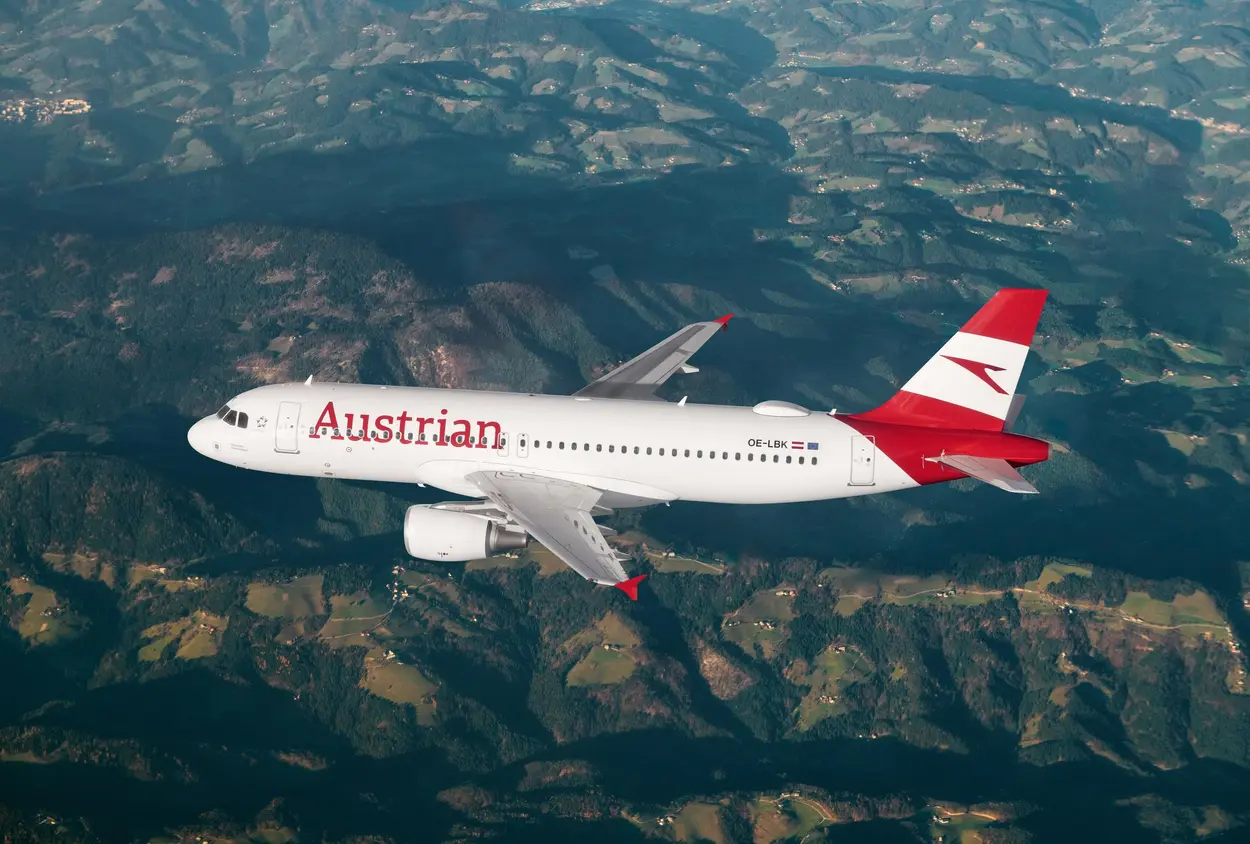
In business class, Austrian punches well above what you’d expect from a smaller European carrier. They have onboard chefs from DO&CO on every long-haul flight, an entirely Austrian wine list, and a Viennese coffeehouse service that no other airline does. The fleet is also in the middle of a major upgrade right now, with new Boeing 787 Dreamliners replacing planes that have been flying for over 20 years.
What’s new with Austrian Airlines business class in 2026?
If you’ve flown Austrian Airlines business class before, or even just looked into it, the airline you’ll find in 2026 is going through some serious changes. There’s new planes, new routes, and new tech in the cabin. I’ve been tracking all of it closely, so here’s what’s worth knowing before you book.
Fleet overhaul: from five aircraft types to two
This is the biggest change happening at Austrian right now, and it directly affects what your flight will look like. The airline is getting rid of its older long-haul planes, the Boeing 767s and 777s, and replacing them with the much newer Boeing 787-9 Dreamliner. Some of those old 767s and 777s have been flying for over 24 years, so this upgrade is long overdue.
Austrian already has two 787 Dreamliners in service, with another nine on the way by 2028. Five of those are coming from parent company Lufthansa’s fleet, and four are being built brand new by Boeing. The 767s should be gone by around mid-2026, with the 777s following after that. If you’re flying later in the year, your chances of getting a newer plane go up.
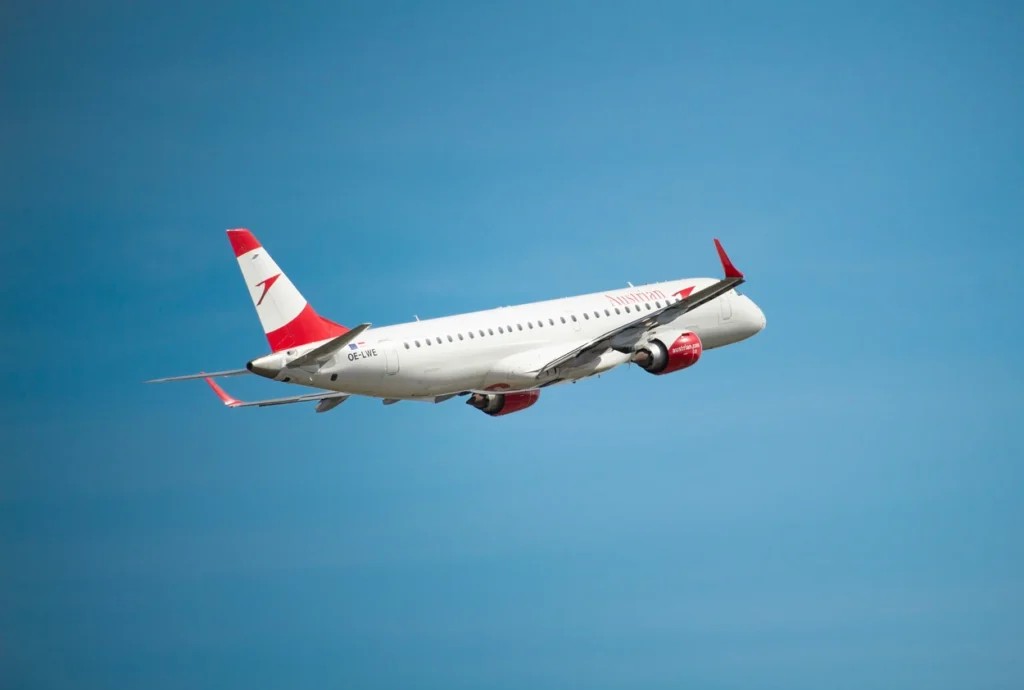
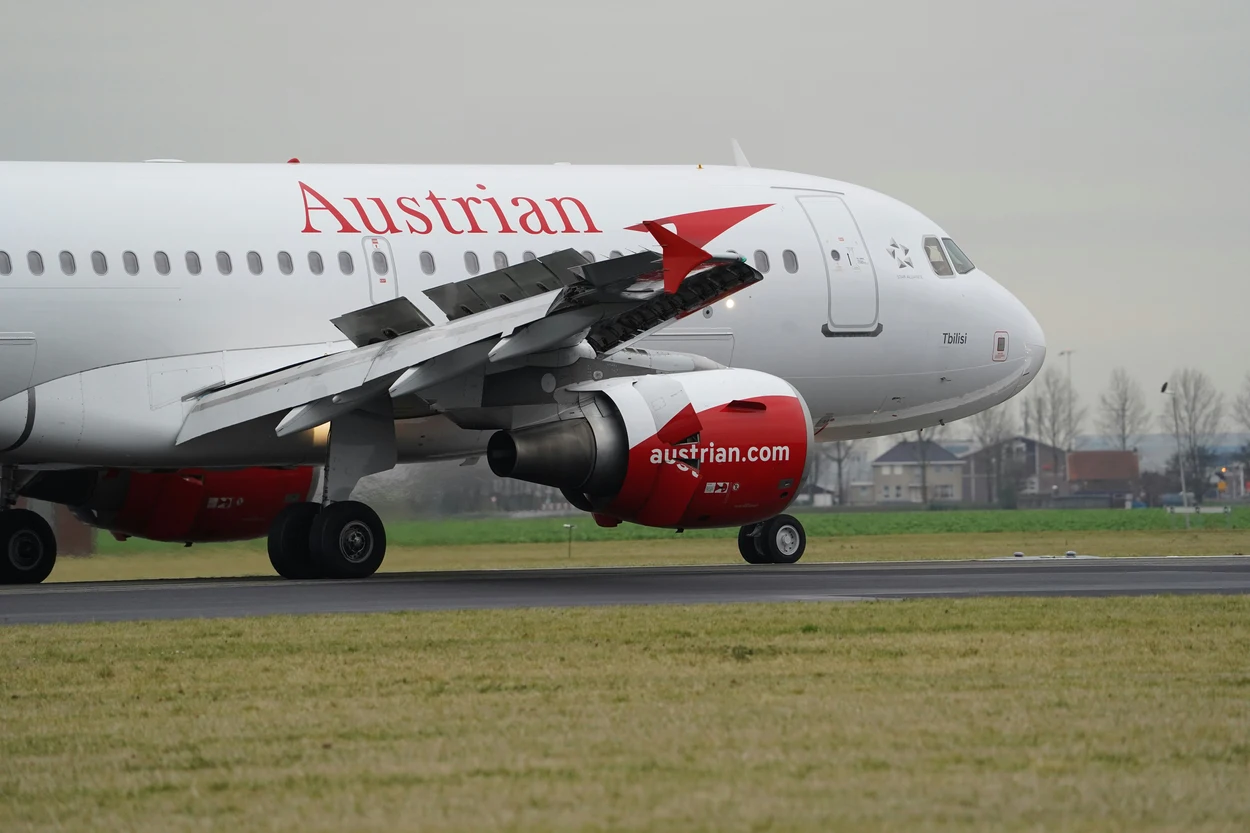
On the shorter European routes, Austrian is also phasing out its smaller Embraer E195 jets and bringing in six new Airbus A320neo aircraft starting summer 2026. By the time everything is said and done, the airline will operate just two aircraft families instead of five. I know fleet changes might sound like nerdy aviation detail, but it matters because the plane you end up on completely changes the experience you’ll have in business class.
The Boeing 787 Dreamliner upgrade
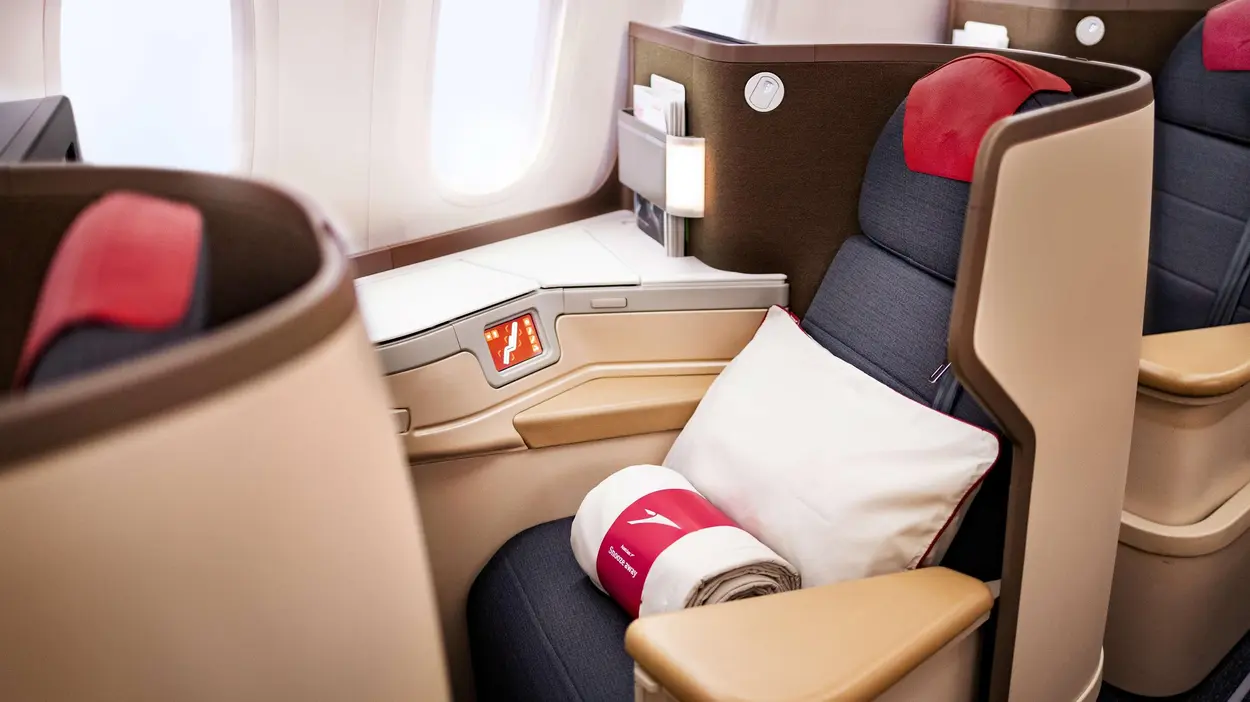
This is where things get exciting if you’re booking business class. On the older 777s and 767s, Austrian uses a staggered seat layout where not everyone has direct access to the aisle. That means if you’re in certain window seats, you have to step over or squeeze past your neighbour to get up. The 787 fixes this completely with a 1-2-1 reverse herringbone layout. Every single one of the 26 business class seats has its own aisle access and converts into a fully flat bed.
The 787 also finally brings Wi-Fi to Austrian’s long-haul flights. Their 777s and 767s still have zero internet onboard. On the 787, you can get a full flight Wi-Fi pass for around €25, and free messaging through WhatsApp and similar apps comes included for everyone. The cabin itself feels more modern too, with electronically dimmable windows, mood lighting that adjusts throughout the flight, and noticeably less engine noise.
As of early 2026, the two Dreamliners are mainly flying the Vienna to New York JFK and Vienna to Chicago routes. As more 787s arrive over the next couple of years, expect them to show up on Boston, Montreal, and other long-haul routes too. My tip would be to always check the aircraft type during the booking process.
One thing I’m keeping an eye on is whether Austrian will eventually adopt the new Allegris cabin that Lufthansa and SWISS are rolling out on their own 787s. Austrian says they’re “still evaluating,” which means for now, all their Dreamliners have the same Collins Super Diamond seat. It’s a great seat, but it would be interesting to see Austrian get its own version of Allegris down the line.
New routes and destinations for 2026
Austrian’s summer 2026 schedule has 133 destinations, up from 127 last year. Seven are brand new, and the airline is adding 490 extra flights to Greece, Spain, and Italy. Below are the new destinations for summer 2026:
✈️ My #1 Tip for Cheap 2026 Flights:
It’s summer, so flight prices are climbing fast - but you don't have to pay them. I’m currently seeing roundtrips to Europe for under $350 (deals you won’t find on Google Flights).
Step 1: Join Going.com's Free Plan here . It takes 10 seconds and requires no credit card.
Step 2: If you're doing a big trip this year, grab the 14-day free trial of Premium. You can even use my code JON25 for 25% off.
Seriously, this is the single best money-saving tool I’ve used in 10+ years.
👉 Send me cheap 2026 flights| Destination | Region | Frequency |
| Alicante | Spain | Twice weekly from March |
| Bilbao | Spain | Twice weekly from March |
| Bastia | Corsica, France | Twice weekly, Jun to Sep |
| Mytilini (Lesbos) | Greece | Weekly, Jun to Sep |
| Ohrid | North Macedonia | Twice weekly, May to Oct |
| Ponta Delgada | Azores, Portugal | Weekly, Jun to Sep |
| Bergen | Norway | 3x weekly, Jun to Sep |
Austrian is also expanding its “coolcation” routes to northern Europe. Weekly flights to Norway are up from 9 to 13, Edinburgh and Sylt are back, and Reykjavik goes up to seven flights a week. I think this is a smart move for anyone who wants to avoid the crowds and heat of southern Europe in peak summer. Below, I’ve listed all of Austrian Airlines’ long haul nonstop routes from Vienna:
| Region | Destinations |
| North America | New York (JFK), Boston, Chicago, Los Angeles, Montreal |
| Asia | Tokyo, Bangkok, Shanghai |
| Africa/Middle East | Cairo, Marrakech, Mauritius, Malé |
Austrian also ran an interesting experiment over winter 2025/26 called the “Dubai Deal,” flying an A320neo to Dubai five times a week at fares from €314 return. Instead of using a big long-haul plane, they sent a smaller narrow-body jet that would have otherwise sat idle during the quieter winter months. Whether it becomes a permanent route depends on how the trial performed, but I’d love to see them bring it back.
New amenity kits with Vienna’s MAK museum
This is a smaller update, but I think it says a lot about what makes Austrian feel different from other airlines in Europe. In October 2025, the airline introduced new business class amenity kits created in partnership with the MAK, Vienna’s Museum of Applied Arts. The designs are pulled from the archives of the Wiener Werkstätte, an early 20th century Viennese design collective that’s still hugely influential in art and design circles.
Three artists from the collective are featured across the range: Koloman Moser, Dagobert Peche, and Mathilde Flögl. Each artist’s design comes in two colour variations, so you’ll get a different version on your outbound flight versus your return. Inside the recycled polyester pouch, you get a sleep mask, toothbrush, toothpaste tablets, earplugs, socks, face cream, and lip balm.
- You may also like: Airlines With the Fastest Wi-Fi (Ranked by a Pro Digital Nomad)
Austrian Airlines business class seats and cabin layout
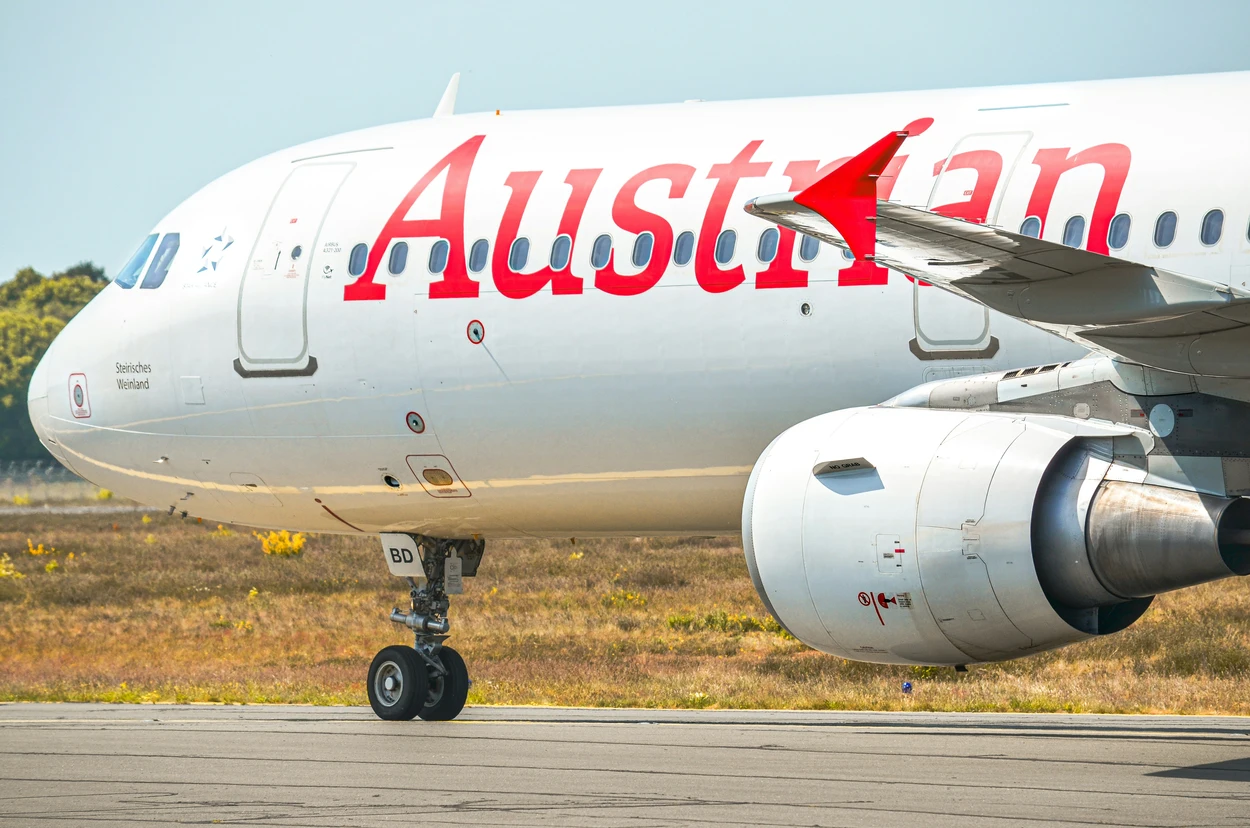
Your business class experience on Austrian depends almost entirely on which plane you end up on. The airline currently operates three long-haul aircraft types, and the seats are different on each one. Here’s what to expect and how to make sure you get the best option.
Boeing 787-9 Dreamliner (the newest)
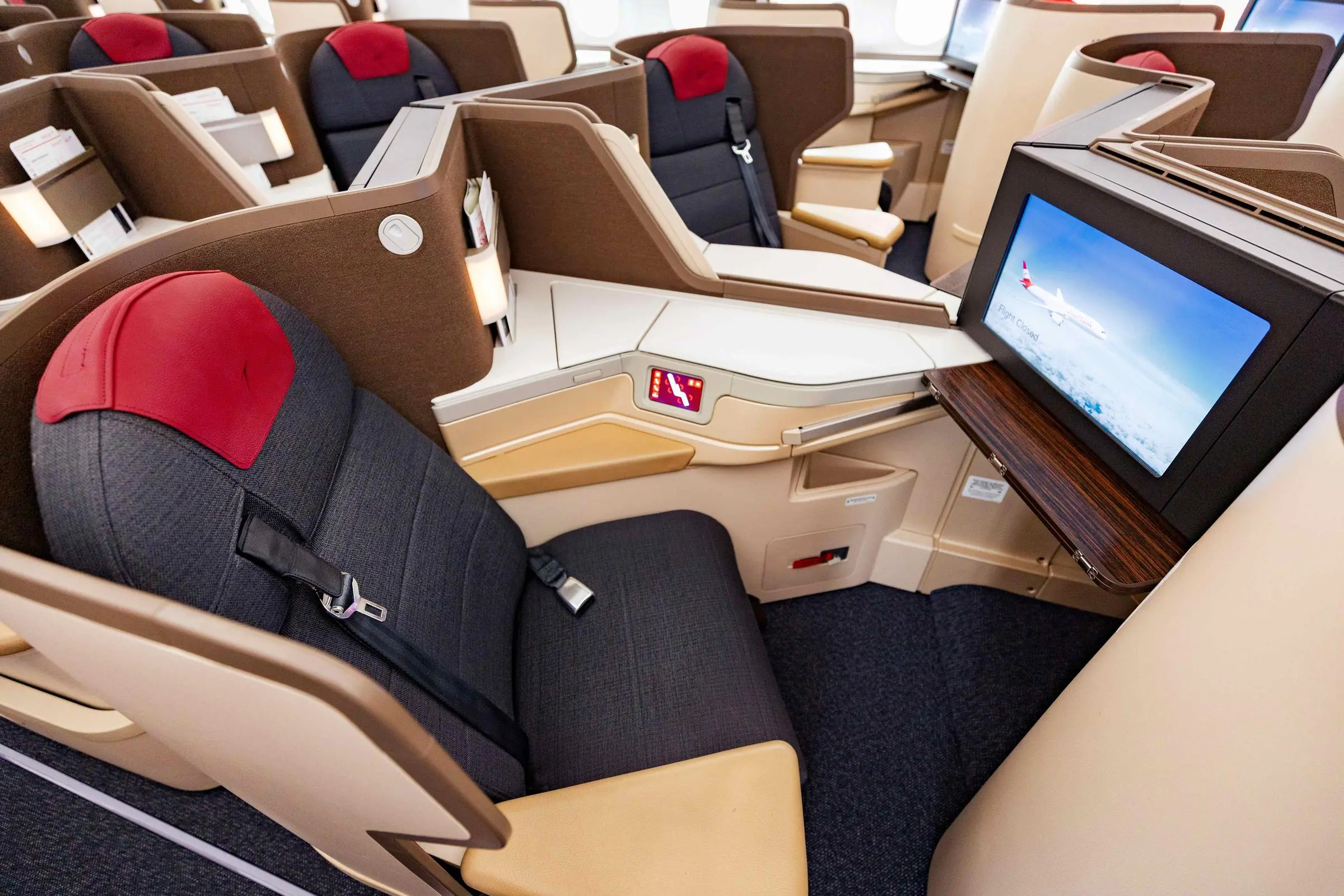
This is the plane you want. It has 26 business class seats in a 1-2-1 reverse herringbone layout. Every passenger gets direct aisle access and a fully flat bed. The seats are Collins Super Diamond, the same product you’ll find on airlines like Air Canada and British Airways.
| Detail | Spec |
| Layout | 1-2-1 reverse herringbone |
| Seats | 26 |
| Pitch | 46 inches |
| Bed length | Fully flat |
| Wi-fi | Yes (€25 full flight, free messaging) |
| Entertainment | 15 inch touchscreen with noise cancelling headphones |
The cabin feels modern and private thanks to raised side panels around each seat. You also get electronically dimmable windows, mood lighting, and Bluetooth audio so you can use your own wireless headphones. I’d take this over the older planes every time.
Boeing 777-200ER (being phased out)
The 777 uses a Thompson Vantage staggered layout that alternates between 1-2-1 and 2-2-2 rows. There are 32 business class seats in the main cabin, and they all go fully flat, but not every seat has direct aisle access. If you’re in an even numbered row by the window, you’ll need to climb past your neighbour to get out.
| Detail | Spec |
| Layout | Staggered (alternating 1-2-1 and 2-2-2) |
| Seats | 32 (main cabin) |
| Pitch | 60 inches |
| Width | 20 inches |
| Bed length | 78 inches, fully flat |
| Wi-fi | No |
The “throne seats” in odd numbered window rows (1A, 1K, 3A, 3K, etc.) are the ones to go for if you’re flying solo. These have extra surface area on both sides and feel much more private. There’s no Wi-Fi on the 777, no individual air vents, and the entertainment screens are smaller and older than the 787.
Boeing 767-300ER (retiring first)
The 767 has a similar staggered layout to the 777 but in a smaller cabin with 24 business class seats. Same Thompson Vantage product, same lack of wi-fi, but a slightly more intimate feel because there are fewer passengers. These planes should be the first to go, likely by mid-2026.
How to check which plane you’ll get
When you book, the aircraft type is usually shown during the flight selection step. Look for “787-9” if you want the new product. You can also check sites like Google Flights, which display the aircraft type for each flight. Keep in mind that airlines can swap planes at short notice, so there’s never a 100% guarantee, but it’s still worth picking a flight scheduled on the 787 if you have the choice.
- Read before you fly: 7 Austrian Mountains So Beautiful You’ll Plan a Trip Just to See Them
Austrian Airlines business class food and drinks
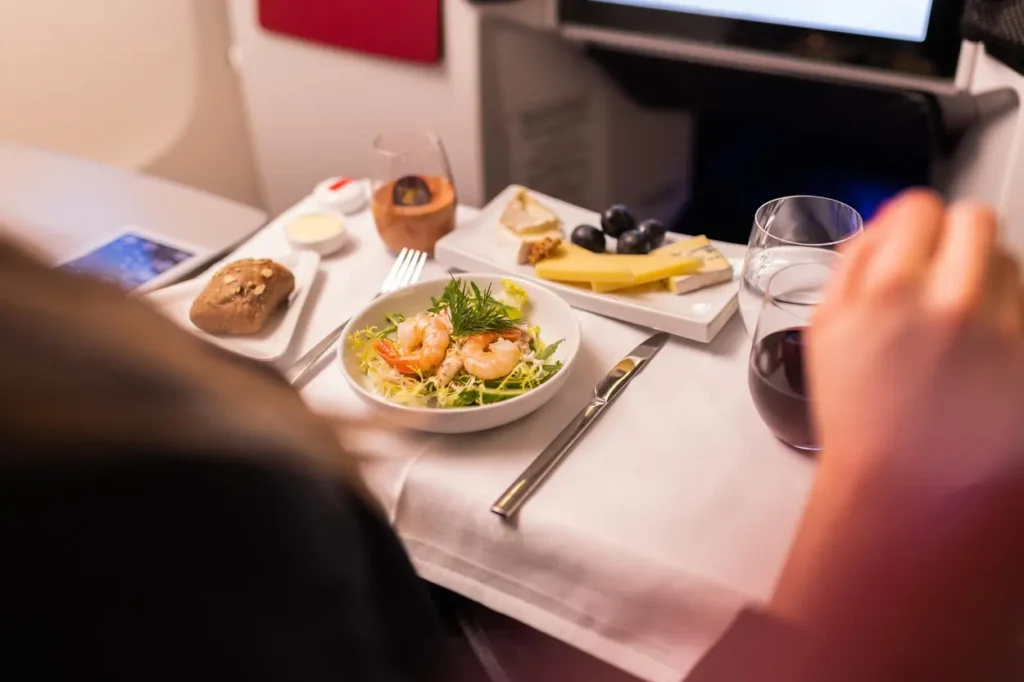
This is where Austrian really separates itself from other European airlines. The food in business class is one of the best reasons to fly with them, and I don’t say that lightly. It’s catered by DO&CO, a Viennese hospitality company that also supplies Formula 1 events and premium venues worldwide.
On every long-haul flight, there’s a DO&CO chef onboard in a chef’s uniform managing the meal service. They don’t cook from scratch (safety rules prevent that), but they oversee the plating, presentation, and timing of everything that comes out of the galley. It’s a small detail that changes the feel of the whole experience, and it’s something only a handful of airlines in the world still do.
What to expect from the meal service
On long-haul flights, the main meal typically includes a welcome aperitif with a bar snack, followed by a starter, main course, cheese selection, and dessert. You choose from three main courses: one Austrian signature dish and two international options. The food uses regional, seasonal ingredients and the quality is consistently above what you’d get on most competitors flying the same transatlantic routes.
You can also pre-select your main course online between six weeks and six hours before departure. I’d recommend this if you have a strong preference. Austrian shows the menu for your specific flight on their website once you enter your flight number.
The Viennese coffee service
After the meal, the flying chef brings around a proper Viennese coffeehouse menu with options you won’t find on any other airline. The Einspänner (black coffee with whipped cream and powdered sugar) and the Wiener Melange (coffee with steamed milk and foam) are the standouts. They’re served in proper glassware with a chocolate on the side, just like you’d get in a cafe in Vienna.
Wine and drinks
Austrian exclusively serves Austrian wines in business class. You’ll typically find three whites, three reds, a dessert wine, champagne, prosecco, and a rosé sparkling from Schlumberger. The spirits have also recently been updated to feature more Austrian producers, including gin from Burgenland, single malt whisky from the Waldviertel region, and Mozart chocolate liqueur from Salzburg. Non-alcoholic options include Vöslauer mineral water, Rauch fruit juices, and Almdudler, a classic Austrian herbal lemonade that’s worth trying if you’ve never had it. The beer selection is all Austrian too, with brands like Gösser and Ottakringer.
- For more reading: The Ultimate First-Timer’s Guide to Salzburg, Austria
Wi-Fi and entertainment on Austrian Airlines
The Boeing 787 Dreamliner has Wi-Fi. The older Boeing 777s and 767s do not. There’s no workaround for this, and it’s been one of the biggest complaints about Austrian’s long-haul product for years. If staying connected during your flight matters to you, book a route that’s scheduled on the 787.
On the 787, a full flight pass costs around €25 with no data cap, and I’d say the speeds are good enough for email, browsing, and light work. Free messaging is included for all passengers, so you can use WhatsApp, iMessage, and similar apps without paying anything. On short and medium-haul European flights, wi-fi is available on most Airbus A320 family aircraft through the FlyNet service. Pricing starts from around €4 for shorter flights.
Entertainment screens
All three long-haul aircraft types have seatback touchscreens in business class with Austrian’s Skylights entertainment system. The 787 has the best screens at 15 inches, while the 777 and 767 screens are older and smaller. The content library includes a mix of current films, TV series, documentaries, audiobooks, and music, though the selection is decent rather than industry leading. Noise cancelling headphones are provided on all long-haul business class flights. On the 787, you can also pair your own Bluetooth headphones with the entertainment system.
European business class flights on the A320 family don’t have seatback screens. You can stream content to your own device through the onboard portal, or just use the Wi-Fi to browse and work. Austrian also offers a free digital newspaper and magazine library through PressReader that you can download to your device before your flight.
- Plan your visit: 13 BREATHTAKING Places in Austria to Visit (Local’s Guide)
Austrian Airlines business class lounge experience
Austrian’s lounge situation is pretty straightforward because the airline only really operates long-haul flights from one airport: Vienna. That means the lounges at Vienna International Airport are the ones that matter most, and thankfully they’re solid. Outside of Vienna, you’ll use partner lounges from other Star Alliance airlines, which vary a lot depending on the airport.
The Austrian lounges at Vienna Airport
There are several Austrian branded lounges at Vienna, split between the Schengen area (for flights within Europe) and the non-Schengen area (for long-haul and non-EU flights). As a business class passenger, you get free access to the Business Lounge in whichever zone your flight departs from. If you hold Star Alliance Gold status or Miles & More Senator status, you can also access the Senator Lounge, which is a step up with fewer people and a quieter atmosphere.
The Business Lounge has a decent hot and cold buffet that rotates throughout the day, a full bar with Austrian wines and beers, coffee machines, and free Wi-Fi. It’s not going to blow you away compared to something like a Qatar Airways or Singapore Airlines lounge, but it does the job well and has a distinctly Viennese feel to it. Seating can get busy during peak departure times, so I’d suggest arriving with a bit of buffer if you want to relax before your flight.
Lounges outside Vienna
When you’re departing from other cities, you’ll use whatever Star Alliance partner lounge is available at that airport. In the US, that usually means a United Club or, at some airports, a Lufthansa lounge. In Asia, you might get access to ANA, Thai Airways, or Singapore Airlines lounges depending on the airport. The quality really depends on where you’re flying from.
Where does Austrian Airlines fly business class?
Every Austrian Airlines flight operates out of Vienna, so wherever you’re going, you’ll be connecting through their hub. For long-haul business class, Austrian serves 20 destinations across North America, Asia, Africa, and the Middle East. Here’s the full long-haul network as of 2026, along with which aircraft you’re likely to get on each route. This matters because, as I covered earlier, the 787 is a significantly better business class experience than the older planes.
| Destination | Frequency | Likely aircraft |
|---|---|---|
| New York (JFK) | Daily or near daily | Boeing 787 |
| New York (Newark) | Daily or near daily | Boeing 787 (from June 2026) |
| Chicago | Daily or near daily | Boeing 787 |
| Boston | 3 to 6x weekly (seasonal) | Boeing 787 or 777 |
| Los Angeles | 4 to 6x weekly (seasonal) | Boeing 777 |
| Montreal | 3x weekly | Boeing 787 or 777 |
| Tokyo | Multiple weekly | Boeing 777 |
| Bangkok | Up to 2x daily (seasonal) | Boeing 777 |
| Shanghai | Up to 4x weekly | Boeing 777 |
| Cairo | Multiple weekly | Boeing 767 or 777 |
| Marrakech | Seasonal | Boeing 767 or 777 |
| Mauritius | Seasonal (winter) | Boeing 777 |
| Malé (Maldives) | Seasonal (winter) | Boeing 777 |
A few things to keep in mind when you’re looking at this table. Aircraft assignments change seasonally and sometimes at short notice, so always verify during booking. Austrian is adding a third 787 to service in June 2026 on the Newark route, and as more Dreamliners arrive, they’ll gradually take over from the 777s and 767s across the whole network. By 2028, the plan is for the entire long-haul fleet to be 787s.
European business class
Austrian also offers business class on its short and medium-haul European flights, but it works differently. On the A320 family aircraft, business class is just the regular cabin with the middle seat blocked, giving you more space but not a separate seat product. You get priority boarding, better catering from DO&CO, and lounge access, but it’s not a lie-flat experience like the long-haul flights. If you’re connecting through Vienna to somewhere in Europe, it’s a comfortable way to travel, but set your expectations accordingly.
Vienna as a connecting hub
- Read more: 10 Best Airlines for Flights to Vienna
How to book Austrian Airlines business class for less
Austrian is part of the Star Alliance. That means you can book their flights using miles from several different frequent flyer programmes. I’ve booked Austrian business class with points multiple times, and the programme you use makes a big difference in how many miles you’ll need and what fees you’ll pay.
Air Canada Aeroplan (my top pick)
If I had to recommend one programme, it would be Aeroplan. A one-way business class flight from the US to Vienna costs around 60,000 to 70,000 Aeroplan points depending on the distance, and there are no fuel surcharges. That’s a big deal because some other programmes hit you with $700 or more in surcharges on top of the miles. You can transfer points into Aeroplan from Chase Ultimate Rewards, Amex Membership Rewards, Capital One, and Bilt, all at a 1:1 ratio.
Aeroplan also has a feature where you can add a stopover on a one-way ticket for just 5,000 extra points. So if you wanted to spend a couple of days in Vienna before continuing to, say, Athens or Cairo, you can do that on a single booking without paying for a separate flight. That makes it especially useful for anyone using Austrian as a connecting airline through Vienna.
United MileagePlus
If you already have United miles sitting in your account, this is the simplest option. United recently dropped partner business class pricing back to around 77,000 to 80,000 miles one-way to Europe, which is better than the 88,000 they were charging in 2024. You can search and book Austrian flights directly on united.com, no fuel surcharges, and the process is straightforward. It costs more miles than Aeroplan, but the convenience factor is real.
Avianca LifeMiles
LifeMiles is another no-surcharge option that often has good availability on Austrian routes. Pricing tends to land between 63,000 and 87,000 miles one-way for business class to Vienna. You can transfer in from Amex, Citi, Capital One, and Bilt. The downside is that the LifeMiles website can be clunky and the customer service isn’t great if something goes wrong, so I’d only use it if the price is noticeably cheaper than Aeroplan for your dates.
Avoid Miles & More for this
Austrian’s own loyalty programme is Miles & More, which they share with Lufthansa and SWISS. As of June 2025, they switched to dynamic pricing for award flights on their own airlines, which means the miles cost is now tied closely to the cash fare. You’re unlikely to get good value here, and you can’t transfer points in from any major US credit card programme. I’d steer clear of Miles & More for booking Austrian business class unless you’ve earned the miles directly from flying.

Global Viewpoint is a personal blog. All content is for informational and entertainment purposes only and does not constitute professional financial, medical, or legal advice.