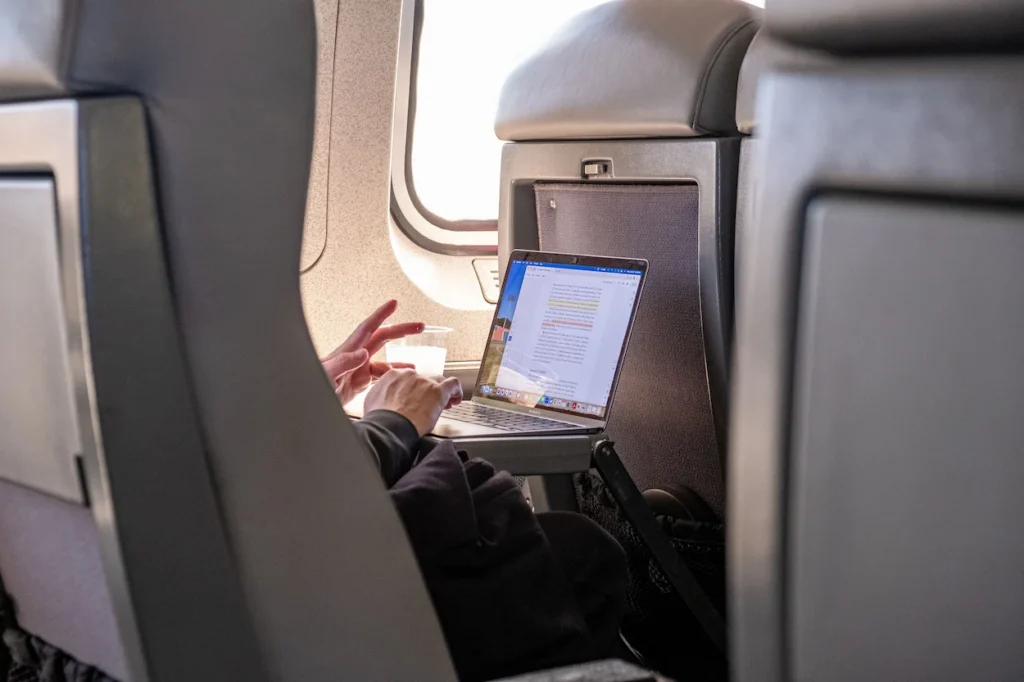
If you’re like me and treat the airplane cabin like a traveling office, in-flight Wi-Fi isn’t just some fancy perk. It can be the center of your workday, keeping deals moving, inboxes clean, and clients happy while you jump time zones. I’ve pulled all-nighters over the Pacific, joined Zoom calls from business class seats, and even closed contracts with nothing but an unreliable tray table and questionable coffee for support.
After hundreds of flights on 5 continents, I don’t trust airline WiFi promises until I’ve stress-tested them with actual work. Forget advertising copy and perfect lab conditions. I want to know: can I fire off Google Docs at cruising speed, handle video streaming when there’s turbulence, or cruise through my backup files on a redeye? That’s why I put this list together. These are the airlines serving up the fastest, most reliable Wi-Fi in 2026…based on how they actually perform, tested by someone whose office is row 14C. Here’s what you need to know before you book that next flight and bank on getting work done at 35,000 feet.
United’s Starlink Rollout Hits 1,000 Planes
United now has Starlink on 400+ aircraft and expects close to 1,000 by the end of 2026, with its full widebody fleet outfitted by summer 2027. It’s free for anyone with a MileagePlus account, and the first transatlantic Starlink flight ran Newark to London in June 2026. Check whether your specific aircraft is equipped before you book, since the rollout is still mid-fleet. Read United’s announcement.
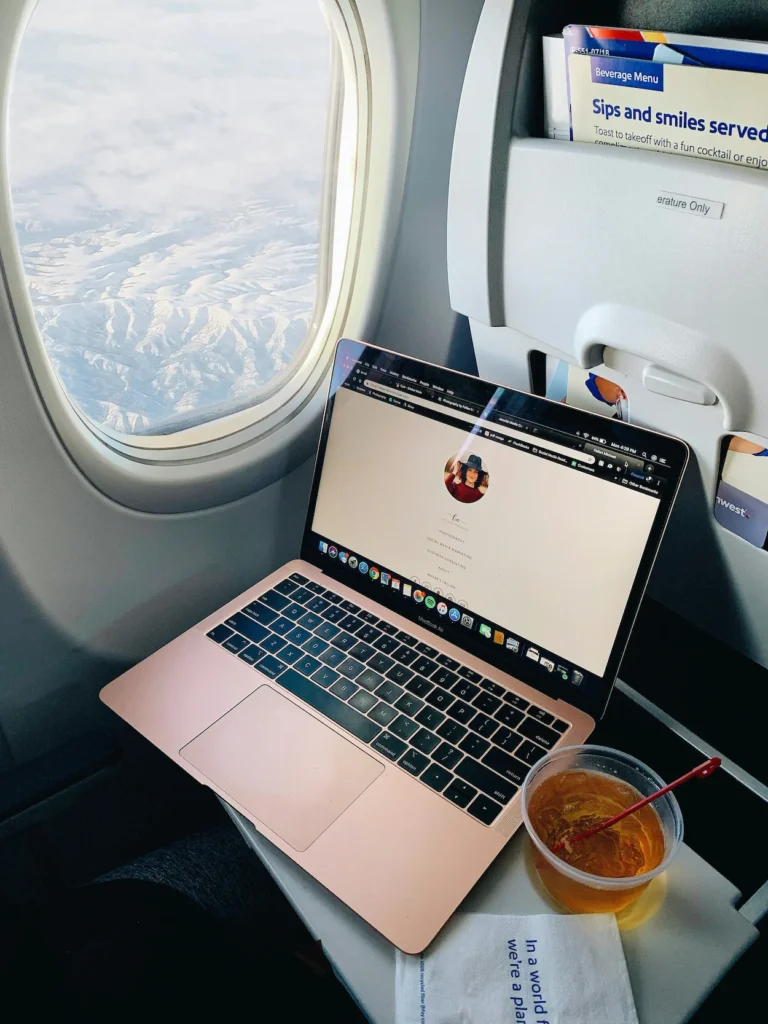
What Really Makes In-Flight Wi-Fi Fast (or Frustrating)?
Let’s take a minute to understand what turns airplane Wi-Fi into a blessing or a productivity killer. If you want a connection that actually works, there’s more to it than just a big “Wi-Fi onboard!” sticker and a price tag. Here’s what matters most:
Satellite Power vs Air-to-Ground Antennas
Most tech-savvy airlines are now satellite-powered (Ka-band is the gold standard), connecting your plane directly to orbiting satellites rather than clunky cell towers down below. Satellite systems like Viasat or Inmarsat are what you want, especially for overseas or rural routes where ground networks max out before you even reach altitude.
Coverage Area: Global vs Regional
Some Wi-Fi only works when you’re flying over land in the US. Others cover you from New York, over Iceland, and all the way to Mumbai. If you’re a remote worker who lives on layovers, global satellite coverage will make your life infinitely easier. If all you need is a couple hours between LA and Denver, most modern US carriers can handle it.
Bandwidth Per Passenger
Airlines love to brag about “blazing speeds”…until a few dozen people log on at once, then suddenly you’re back in 2007. The best airlines invest in more bandwidth per passenger, throttle less, and can actually support a few people streaming, browsing, and working without meltdown.
Aircraft Tech and Retrofitting
Not every 737 or Dreamliner is created equal. Airlines upgrading their fleets with new antenna tech and routers are light years ahead of those still relying on 2014-era wiring. Always check which aircraft you’re getting – a retrofitted A321 can beat an old 777 any day.
Price vs Performance
Some airlines lure you in with free or $5 Wi-Fi, then cap your data at dial-up speeds. Others charge $20 for true business-grade speeds and let you video call with zero lag. I’ll flag these differences below so you don’t get burned on price or performance.
Enough tech talk. Let’s rank the real winners.
Top 7 Airlines With the Fastest Wi-Fi in 2026 (Ranked)
1. Delta Air Lines
If you told me five years ago that Delta would lead the Wi-Fi revolution, I would’ve laughed. But here we are. Delta hit the throttle in 2024 by rolling out Viasat-powered satellite Wi-Fi across nearly its entire mainline fleet. If you’re a SkyMiles member (it’s free to join), you get Wi-Fi for free on almost all domestic flights – no strings, no catches.
What’s most impressive is Delta’s commitment to keeping these speeds high, even after everyone logs in. I’ve run speed tests between NYC and LA, pinged Slack channels midair from Atlanta to SFO, and even joined a client-facing webinar without glaring pixelation or dropouts. Downloads are fast, uploads are steady, and the gate-to-gate experience is genuinely reliable. In my experience, you can expect 20-80 Mbps down on good days. Even on an aging 757, I’ve streamed YouTube or joined video meetings with hardly a stutter.
Delta has invested in smart bandwidth management so work-focused travelers aren’t throttled just because someone else is watching TikTok in 30B. That’s huge for anyone whose income depends on a strong connection.
Where Delta Really Shines
The best Wi-Fi performance is on flagship domestic routes: JFK to LAX, Atlanta to San Francisco, Detroit to Seattle. Premium cabins gain extra support, but economy is nearly as solid. If you need to maximize productivity across time zones, Delta is your new go-to.
✈️ My #1 Tip for Cheap 2026 Flights:
It’s summer, so flight prices are climbing fast - but you don't have to pay them. I’m currently seeing roundtrips to Europe for under $350 (deals you won’t find on Google Flights).
Step 1: Join Going.com's Free Plan here . It takes 10 seconds and requires no credit card.
Step 2: If you're doing a big trip this year, grab the 14-day free trial of Premium. You can even use my code JON25 for 25% off.
Seriously, this is the single best money-saving tool I’ve used in 10+ years.
👉 Send me cheap 2026 flights- Pro tip: Even if you’re not a frequent flyer, creating a free SkyMiles account before you board unlocks the fastest Wi-Fi speeds on the market for $0.

2. JetBlue
JetBlue still sets the standard for no-nonsense, high-speed Wi-Fi in the US market. True to their “Even More” philosophy, every JetBlue aircraft promises free, high-speed Wi-Fi on every seat, coast to coast. I’ve repeatedly managed large cloud file uploads and group Zoom calls with zero drama.
JetBlue partners with Viasat, the top satellite provider, ensuring excellent coverage even on routes that cross the Rockies, the Midwest, or big chunks of ocean. Unlike some competitors, JetBlue doesn’t play games with data caps or throttling mid-flight. There’s no login dance; just connect, accept the terms, and you’re rolling.
Why JetBlue Wins for Remote Work
For freelancers, consultants, or digital nomads who live or die by cloud syncs, JetBlue Wi-Fi just works. It’s consistent, no upcharges, and genuinely fast for every passenger regardless of fare class or route. One afternoon, after racing to upload last-second PowerPoint decks en route from Boston to San Diego, I was shocked to find my work finished 30 minutes before landing – a rare miracle in this industry.
Where it’s Best
JetBlue’s service is excellent all across their route map, but particularly strong on trunk lines like Boston to San Diego, JFK to Seattle, and anywhere their new A321neos are flying. Their A320s and new A220s also offer fast, high-speed Wi-Fi in my recent experience.
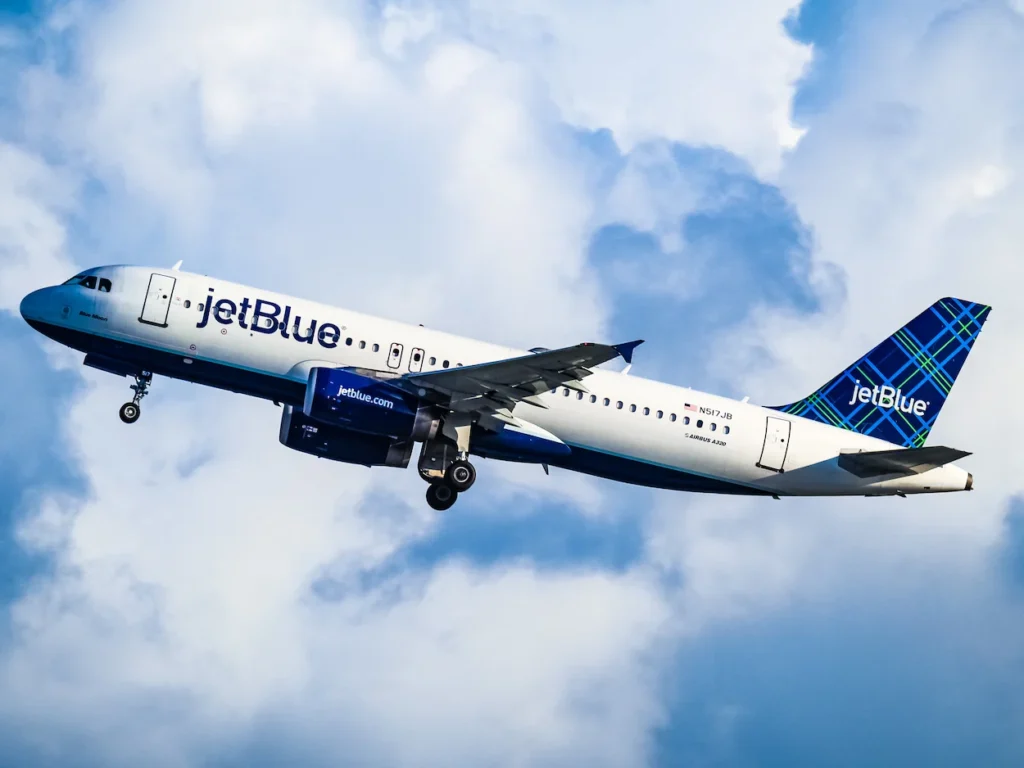
3. United Airlines
A couple of years back, United’s Wi-Fi was at “only if you must” status. That’s no longer the case in 2026. United Airlines is modernizing with multiple satellite partners (Viasat, Panasonic, Thales), so quality depends on the exact aircraft. Their latest domestic and international retrofits now deliver reliable, often surprisingly fast connections.
For regular business travelers, United’s mileage plans and Wi-Fi day passes make sense and can save you money. On a good aircraft (think 787s and most 737 MAXs), I’ve had no trouble live editing Google Spreadsheets and listening to live video calls from Boston to Denver without missing a beat.
Why United is Gaining
United’s transition to satellite is happening fast. Their best-in-class gates and hubs, like Newark, Denver, San Francisco, and Chicago O’Hare, are consistently supported by high-speed Wi-Fi. While it’s not as uniformly fast as Delta and JetBlue yet, United is closing the gap with each newly outfitted jet.
Where to Look
Check your aircraft type before booking; seek out 777s, 787s, and select A321s for peak performance. Their best Wi-Fi can rival Delta, particularly on flagship domestic and international routes. But remember that performance varies…look for Viasat-enabled aircraft (like 787s) for the best experience.
- Tip: Download the United app and pre-purchase Wi-Fi for discounts or package deals if you plan to fly United repeatedly.
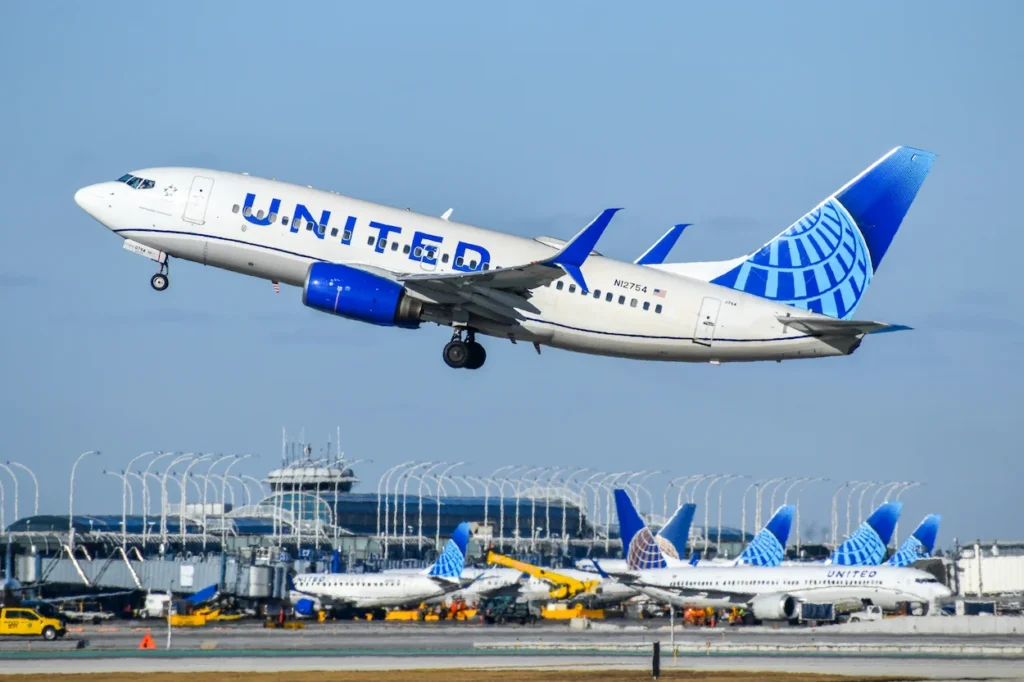
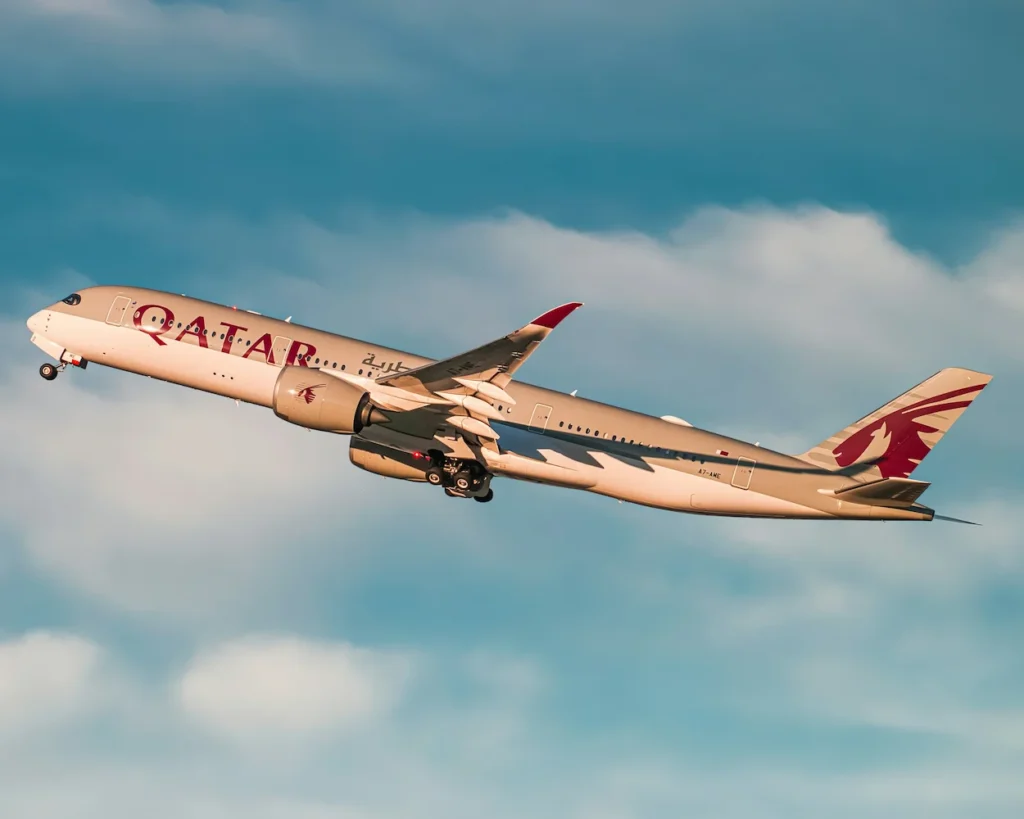
4. Qatar Airways
No airline blends long-haul comfort and in-flight productivity quite like Qatar Airways. Qatar has gone all in on Starlink, and they moved faster than anyone. The A350, 777, and 787-8 fleets are all done, with the 787-9s expected to be finished before the end of 2026. That’s roughly 120 widebodies, and it’s complimentary with one-click access, with speeds up to 500 Mbps that handle gaming, VPN access, and sports streaming.
Long-haul red-eyes from Doha to Europe or Asia become shockingly productive. I’ve spent 7-hour stretches over the Middle East, working on massive Figma files while clients barely noticed I was at 40,000 feet. Qatar doesn’t over-promise and under-deliver. Starlink is free in every cabin on equipped aircraft, so you get the same connection in economy that you get up front in business class.
Why Qatar Outshines Others Overseas
What sets Qatar apart is stability. Even during full cabins on prime transcontinental routes, I’ve streamed press calls, handled large Google Docs, and managed company Slack with barely a hiccup. Their approach to fleet-wide upgrades and bandwidth management is serious.
Where It’s Best
Qatar is unbeatable on flagship long-hauls: Doha to London, Doha to Tokyo, even longer flights to the US or Australia. If you need to be productive between continents, this is the airline to fly.
- Note: Aircraft type still matters more than the route. An A350 or 777 is close to guaranteed. A 787-9 may not have it yet, so check your equipment before you book if the connection is the deciding factor.
5. Alaska Airlines
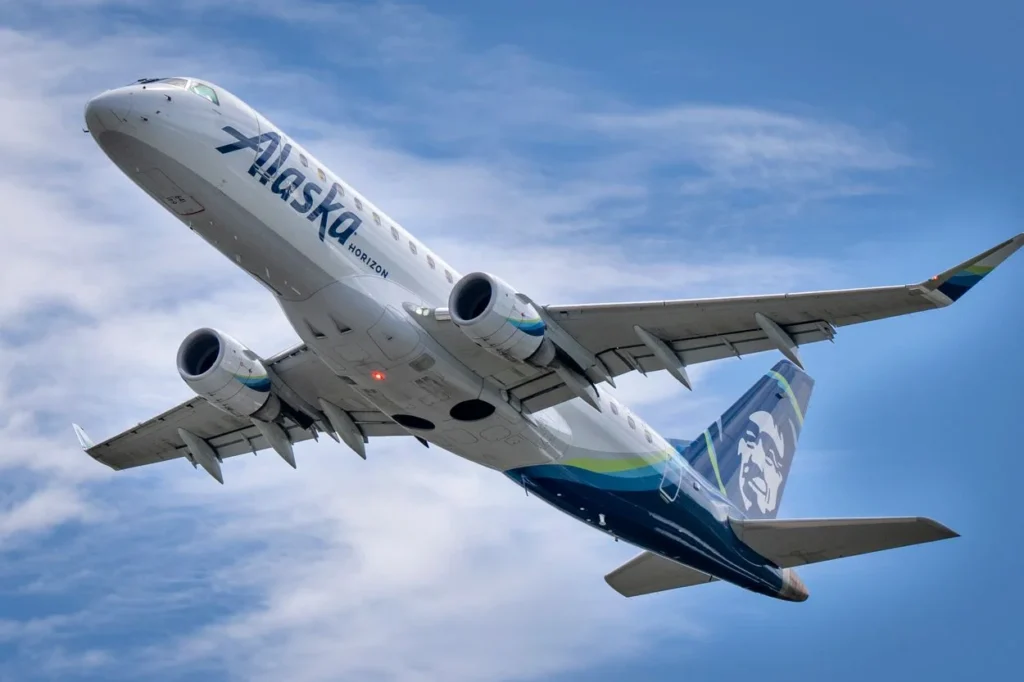
Alaska Airlines is proof that you don’t need to pay legacy-carrier prices for a solid, high-speed connection. Using Viasat across the fleet, Alaska offers low-cost, high-performing Wi-Fi that consistently beats expectations, particularly on the West Coast and transcontinental routes.
Even in economy, messaging is free, and low-cost day passes enable full productivity. I’ve reviewed files in Google Drive and held creative meetings in Slack from Portland to San Francisco without a single “can you hear me now?” moment. Streaming is possible, but the sweet spot is fast loading for web work, remote access, and collaborative documents.
Where Alaska Rules
Their best consistency is on West Coast and transcon routes: Seattle to LA, Portland to San Francisco, and pretty much anywhere up and down the Pacific spine. The newer the plane, the faster your uploads.
Tips on Using Alaska Wi-Fi
Buy your Wi-Fi pass in advance if possible to save a few bucks. Keep an eye on their newly delivered 737 MAX aircraft for the very best onboard tech. It’s one of the airlines with the fastest wifi, hands down!
- Save big on your next flight: 5 Proven Tips to Fly to Alaska for Cheap in 2026
6. Singapore Airlines
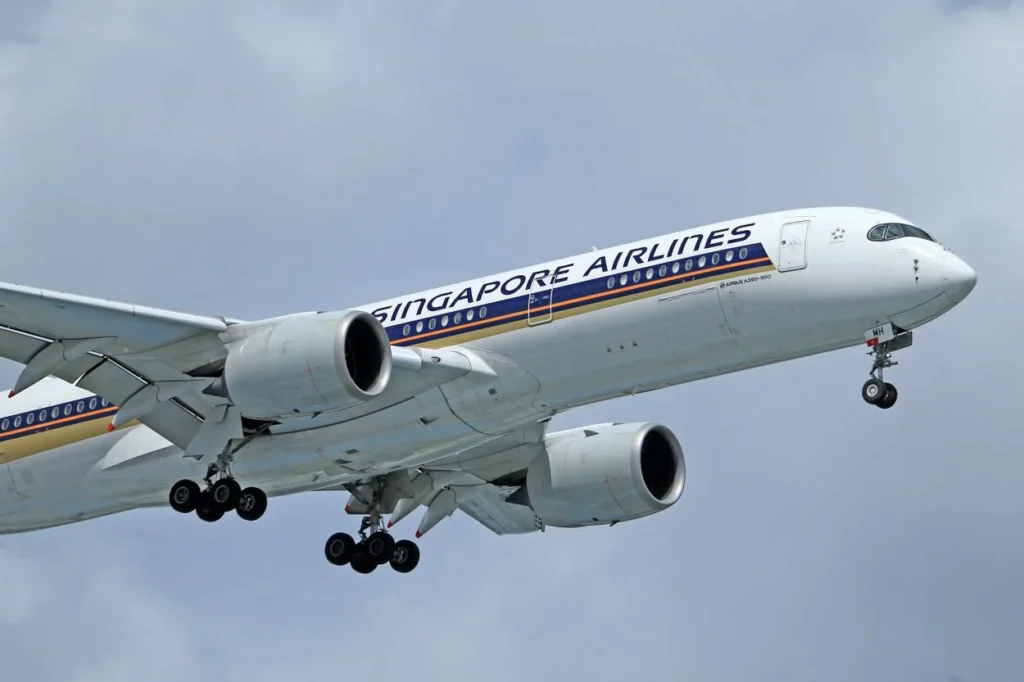
If you’re an international business traveler who likes to get things done, Singapore Airlines deserves a spot on your radar. Singapore is still running its older Panasonic and Viasat setup, which is solid but no longer near the top.
They confirmed Starlink in May 2026, with a progressive rollout starting in Q1 2027 and finishing by the end of 2029, covering the A350-900 long-haul, A350-900 ultra-long-range, and A380 fleets. The 787-10, 777-300ER, 737-8 MAX, and A350 medium haul are not in the plan.
In premium cabins (First and Business), Wi-Fi is usually free and fast enough for video calls, screen sharing, and file syncing. Even in economy, prices are no longer outrageous, and you get robust enough speeds for cloud collaboration, WhatsApp, and light media streaming.
Why Singapore Airlines Wins for Business
The global reach and reliability mean you can punch through a week’s worth of email and project work while crossing the Pacific, waking up refreshed and ready. The biggest strength is their consistent coverage over land and sea, especially on the A350, A380, and 777-300ER fleets.
Route Recommendations
Singapore to Frankfurt or LA is where I’ve had flawless work sessions office-style from a window seat. Even on the marathon Singapore-Newark run, I hit zero dead zones.
- Key Advice: Until Starlink arrives in 2027, book premium cabins or buy the upgraded data plan if you need real bandwidth. When it does launch, it’ll be free for everyone, though premium economy and economy passengers will need a KrisFlyer account.
7. Emirates
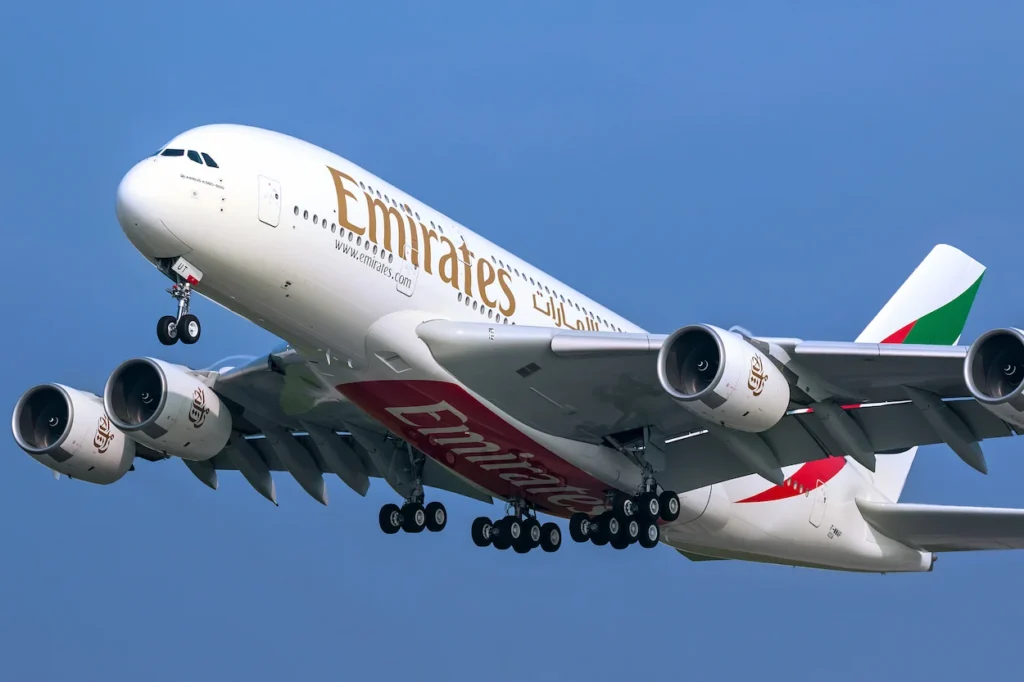
Emirates is where luxury and in-flight Wi-Fi finally meet. They started installing Starlink on the 777 fleet in November 2025 and began A380 installations in February 2026, working through roughly 14 aircraft a month across all 232 widebodies, with completion targeted for mid-2027. It’s free in every cabin with one-click access, no payment and no Skywards membership required.
For basic work, messaging, and video calls, performance is smooth and reliable at 40,000 feet. I’ve worked on proposals from the Emirates Lounge in Dubai, closed my laptop, and seamlessly picked up projects in the air over the Atlantic with barely a blip. While the roll-out is ongoing, the current experience on new A380s rivals what you’d find on the very best US carriers.
Where Emirates Shines
The Dubai to London and Dubai to New York routes are particularly strong, with consistently fast speeds and near-zero dropouts. Emirates is working hard to extend these upgrades fleet-wide, so always check if your flight features the latest Wi-Fi before booking.
Insider’s Note
You don’t need Skywards for this one. Starlink is free for everyone on equipped aircraft, so the only thing to check is whether your specific plane has been retrofitted yet. The A380s get three antennas each, an industry first, which is how they cover both decks.
✈️ The fastest Wi-Fi on this list is usually free up front
Qatar, Singapore, and Emirates all throw in complimentary high-speed Wi-Fi in business and first, which is exactly why I stopped paying cash for those seats and started waiting on alerts instead. Going Elite has pinged me with Doha and Dubai business class fares running 40-60% below what Google Flights was showing, and I’ve caught nonstop biz to Europe around $1,700 the same way. If you’re billing hours at 40,000 feet, one fare drop covers the membership for the year.
Try Going Elite free for 14 days. Use code JON25 for 25% off if you keep it.
Tips for Getting the Best Wi-Fi Experience in the Air
Here’s what frequent flyers and remote workers do to squeeze every bit of value from in-flight Wi-Fi:
Pick the Right Seat
Believe it or not, your seat does matter. Routers are often mid-cabin or near the front, so aiming for those seats can sometimes net you a slightly stronger signal. If the router is rear-mounted, the back may win, but avoid sitting directly beside the kitchen units or in bulkhead rows where interference is likelier.
Check Aircraft Type Before You Book
Don’t just trust the airline marketing. Go to the “Flight Details” section or use SeatGuru to see what aircraft model and Wi-Fi system you’re getting. Viasat and Ka-band satellites always beat outdated air-to-ground bands for speed. If you see an A321neo, 737 MAX, 787, or A350, you’re usually ahead of the game.
Use a Lightweight VPN
Airplane Wi-Fi is a public network. You never know who’s feeling nosy in 23D. Install a lightweight VPN before you go. Look for one that won’t choke your bandwidth (ProtonVPN, TunnelBear, or NordVPN with “split tunneling” features work well).
Download Essentials Before Takeoff
No matter how fast the Wi-Fi, never trust 100% cloud access. Sync files, download emails, and queue up Spotify playlists before you board. Large downloads are best saved for the gate or your home Wi-Fi.
Time Your Sessions for Speed
Wi-Fi speeds fluctuate with user traffic. Early mornings and redeyes are legendary for low usage – prime time for a backlog-blitzing work sprint. Avoid working during meal services or just after boarding when everyone logs on to stream.
A few seasoned habits can turn mediocre connections into surprisingly productive sessions.
Final Thoughts: Getting the Most from In-Flight Wi-Fi in 2026
A decade ago, working efficiently from the sky was a pipe dream. In 2026, you can juggle projects, stream calls, and keep your business thriving from just about anywhere above the clouds. The right airline and aircraft make all the difference. Invest a little time checking your route, aircraft, and Wi-Fi provider, and you’ll be primed for gate-to-gate productivity.
For anyone who treats travel as an extension of their work life, these rankings are a cheat code. Don’t just book the cheapest ticket; book the one that keeps you connected. That’s how you turn long-haul flights into billable hours, keep your freedom, and, maybe, sneak in a Netflix episode between projects.
Starlink is no longer the thing to watch for. It’s the thing that already sorted the winners from the losers. Qatar, Emirates, and United are deep into fleet-wide rollouts, Hawaiian, JSX, and airBaltic finished theirs, and Southwest started installing in summer 2026.
Delta sat this one out and is waiting on Amazon Leo, which isn’t expected before 2028. When you’re comparing airlines on connection speed now, the real question is whether your specific tail number has been retrofitted, not which carrier you picked.
Here’s to higher standards in the skies and next-level connectivity at 35,000 feet. Safe travels – may your Wi-Fi be strong, your coffee hot, and your inbox empty by landing.

Global Viewpoint is a personal blog. All content is for informational and entertainment purposes only and does not constitute professional financial, medical, or legal advice.