Portugal hit me right in the feels. Sitting at this tiny cafe in Porto, watching locals greet each other with kisses while old trams rumbled by, I finally got why everyone’s moving here. The barista knew every customer’s name, the food was mind-blowing, and nobody was rushing. Plus, my coffee and pastel de nata cost less than a chain coffee back home.
The best places in Portugal mix old-school charm with modern life perfectly. In Braga, I watched people work from centuries-old cafes, then join locals for sunset drinks in the medieval square. Yeah, everyone’s talking about Portugal right now, but trust me, it lives up to the buzz. Ready to see why this country keeps stealing hearts? Let me show you around.
2026 Update
Heads up if you’re planning the move: Portugal’s NHR tax break closed to new applicants on March 31, 2025. The replacement (IFICI, or “NHR 2.0”) only covers people working in research, tech, certified startups, and a few other approved fields. Retirees and most remote workers fall outside it now, so run the tax math before you commit.
My Top 3 Places to Live in Portugal in 2026
If I had to narrow this whole list of down to three, these are the ones I’d hand a friend without a second thought. Each one suits a different kind of person, so the right pick depends less on which city is “best” and more on what you want from daily life. Here’s my top three places to live in Portugal in 2026.
 Best All-Rounder
If I Moved Tomorrow
Best All-Rounder
If I Moved Tomorrow
Porto
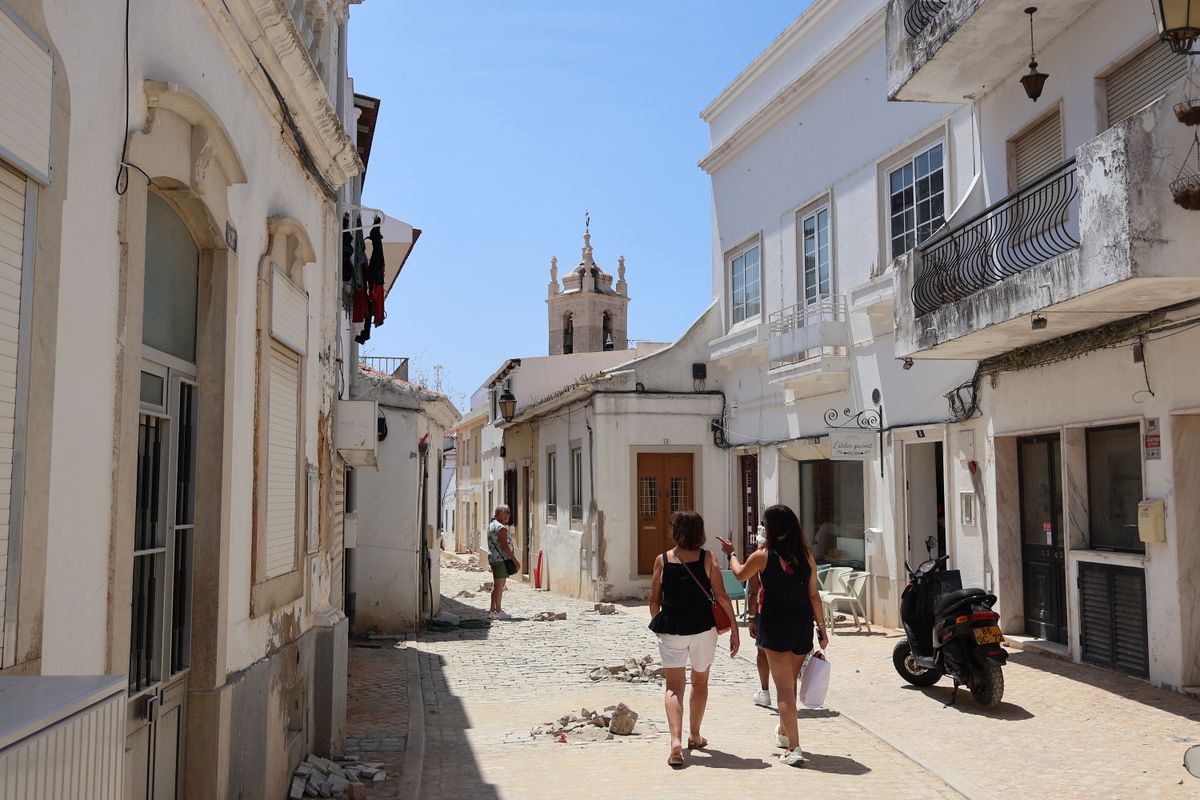 Best for Slow Living
My Personal Pick
Best for Slow Living
My Personal Pick
Tavira
 Best Value for Money
Smartest Budget Pick
Best Value for Money
Smartest Budget Pick
Braga

Picking the Right Visa
Once you've narrowed down a city, the next question is how you get there legally. There are three main routes for non-EU movers in 2026.
D7 Visa works if you have passive income (pensions, dividends, rental income, Social Security). The bar is roughly €920/month plus around €11,040 in savings. This is the retiree route.
D8 Digital Nomad Visa is for remote workers with foreign income. You'll need €3,680/month and the same €11,040 in savings. Active freelance or salaried work qualifies here, not on the D7.
Golden Visa is still alive in 2026. Real estate stopped qualifying in 2023, but a €500,000 fund investment or €250,000 cultural donation still works. You only need to spend 7 days a year in Portugal to maintain it.
1. Aveiro
- 🏡 Best for: Coastal living without the Lisbon price tag
- 💶 One-bedroom rent (2026): €650 to €1,000/month
- ☀️ Climate: Mild year-round, but rainy November through February
- 🚆 Lisbon by train: 2 hours 15 minutes (€16 to €25 each way)
People call Aveiro the "Venice of Portugal," and the canals and moliceiro boats earn the comparison. The bigger draw for anyone moving here is what your money buys. Day-to-day costs run about 21% below Lisbon, a single person lives well on roughly €1,389 a month in 2026, and a one-bedroom averages around €700.
The relocation practicalities are excellent. Aveiro's public hospital is one of the better ones in the Centro region, and the train station puts you in Porto in 40 minutes for under €10. The University of Aveiro means English is widely spoken in cafés and shops near campus, which softens the language curve in your first months.
A few things I should flag. It rains hard from late autumn through early spring, and Atlantic humidity makes the cold feel sharper than the thermometer reads. Summer brings tourists to Costa Nova and the historic core, though never at Algarve levels. If you want sun and beach weather every month of the year, the south fits better.
For everyone else, Aveiro hits a sweet spot. You get coastal living, a walkable historic center, two airports within an hour, and prices that let you save while you settle in. Honestly, I'd recommend it in a heartbeat.
- Read next: 12 Must-See Landmarks in Lisbon

2. Braga
- 🏡 Best for: Families and remote workers on a budget
- 💶 One-bedroom rent (2026): €450 to €700/month (lowest of any major Portuguese city)
- ☀️ Climate: Mild summers, cool wet winters, occasional frost
- 🚆 Porto by train: 1 hour (€3.55 each way)
Braga is the best value-for-money city in Portugal right now. Living costs run roughly 27% below Lisbon and 14% below Porto, and a single person lives well on €1,200 to €1,460 a month including rent. The city was voted Best European Destination back in 2021, and 94% of residents say it's a good place to live.
✈️ My #1 Tip for Cheap 2026 Flights:
It’s summer, so flight prices are climbing fast - but you don't have to pay them. I’m currently seeing roundtrips to Europe for under $350 (deals you won’t find on Google Flights).
Step 1: Join Going.com's Free Plan here . It takes 10 seconds and requires no credit card.
Step 2: If you're doing a big trip this year, grab the 14-day free trial of Premium. You can even use my code JON25 for 25% off.
Seriously, this is the single best money-saving tool I’ve used in 10+ years.
👉 Send me cheap 2026 flightsThe relocation case is strong on the day-to-day. The University of Minho anchors a growing tech scene that locals call "Portuguese Silicon Valley," with coworking spaces, fast fiber, and English widely spoken among the under-40 crowd. Hospital de Braga is one of the better facilities in northern Portugal, public transit gets you across the city for under €2, and day trips are a selling point with Atlantic beaches 30 minutes west and Peneda-Gerês National Park 15 minutes east.
A few honest caveats. Local salaries are lower than Lisbon or Porto, so this works best if your income comes from a foreign or remote source. Winters get cold and damp by Portuguese standards, with frost on the higher streets some mornings, and the expat community stays smaller than in the bigger cities.
If you want authentic Portugal, low costs, and infrastructure that holds up, Braga is hard to beat. The food scene alone (full meal with wine for €7 to €12) is worth the move. I'd consider it for a longer stay myself.
- Read next: 12 Breathtaking Places in Porto

3. Cascais
- 🏡 Best for: Families willing to pay a premium for international schools and beach access
- 💶 One-bedroom rent (2026): €1,500 to €2,200/month (€1,800 to €3,200 for two beds)
- ☀️ Climate: Atlantic breezes, mild winters, the most stable weather near Lisbon
- 🚆 Lisbon by train: 40 minutes (€2.40 each way on the Cascais Line)
Cascais is the most expensive place on this list, and the math only works for a specific kind of mover. If you've got school-aged kids, two strong incomes, or you're on a corporate relocation package, it's brilliant. Five international schools sit within the municipality, including St. Julian's and TASIS, with annual fees from €13,000 to €22,000.
What I love about Cascais is the lifestyle ceiling. You get Atlantic surf at Guincho, the marina, walkable streets that feel European rather than touristy, and a 40-minute train into central Lisbon for under €3. The expat community here is the most organized in Portugal, with active Facebook groups, weekly meetups, and English-speaking everything from doctors to dog groomers.
What I'd push back on: rents have been priced for the expat market for years now, and you're often paying 30 to 40% more than you would for the same square footage in central Lisbon. The town center fills up with day-trippers in summer, and homes here often lack proper heating (a real issue in damp January). If your budget is anywhere under €2,500 a month for housing alone, Cascais will feel like it's fighting you.
For families with the budget, I'd recommend it without hesitation. For solo movers or anyone watching their euros, look at Oeiras or Sintra instead. The trade-off is real and worth thinking through carefully.

4. Coimbra
- 🏡 Best for: Budget-conscious remote workers and academic types
- 💶 One-bedroom rent (2026): €500 to €860/month (€590 outside the centre)
- ☀️ Climate: Hot dry summers, cold wet winters, big seasonal swing
- 🚆 Lisbon by train: 1 hour 45 minutes (€18 to €27 each way)
Coimbra sits in central Portugal on the Mondego River and revolves around one of Europe's oldest universities, founded in 1290. The student population shapes everything. Cafes stay open late, prices stay reasonable, and the bookshop-to-bar ratio is impressive. You can live well here on €1,063 a month as a single person - roughly 40% below Lisbon.
The healthcare angle is the underrated part of the pitch. Centro Hospitalar e Universitário de Coimbra is one of the most important medical centres in Portugal. The internet is fast, the city is walkable end-to-end in 30 minutes, and a hot desk at a co-working space runs around €120 a month. The food scene leans heavily on small family-run tascas where lunch with wine costs under €10.
It's quieter than Porto or Lisbon and the social scene revolves around the academic calendar. June through September can feel sleepy when students leave, and the expat community is small (most internationals here are tied to the university or hospital). Winters are properly damp and older apartments often have no central heating, which can be tough.
For solo movers, retirees, or remote workers who like a slower pace and don't need a big expat scene, Coimbra is one of the smarter choices in the country. I'd put it on a shortlist for anyone watching their budget. The history alone makes it worth a long visit before you decide.

5. Évora
- 🏡 Best for: Retirees and slow-living types with a remote income
- 💶 One-bedroom rent (2026): €450 to €600/month
- ☀️ Climate: Hot, dry, sunny most of the year (over 3,000 hours of sun annually)
- 🚆 Lisbon by train or bus: 1 hour 30 minutes (€12 to €15 each way)
If you want quiet, slow, and properly Portuguese, Évora is the city to look at. It's the capital of the Alentejo region, sits inside a UNESCO-protected old town, and has a population of around 53,000. A single person lives well here on €1,136 a month, and rent prices are roughly half of Lisbon's.
The trade is summer heat. Évora bakes from June through September, with temperatures regularly climbing past 38°C and locals quietly disappearing for siestas between 2 and 4pm. Air conditioning isn't standard in older homes, so check before you sign anything. Winters are cool and dry rather than damp, which most people prefer to the Atlantic coast version.
Day-to-day life leans heavily on the basics. There's a public hospital, a university (which keeps a small but real cafe scene running), good wine and olive oil for almost nothing, and Roman ruins you walk past on the way to the supermarket. Job opportunities are thin and tied mostly to tourism, so this works if you bring your income with you rather than hoping to find it locally.
I'd recommend Évora to a specific person. Someone who wants to read more, walk more, and spend less. If that sounds like you, the cost-of-living math here is hard to beat anywhere else in Western Europe. It's worth a long weekend visit before you commit.

6. Faro District
- 🏡 Best for: Sun-chasers and digital nomads who want airport access
- 💶 One-bedroom rent (2026): €750 to €1,000/month (cheaper inland or in Olhão)
- ☀️ Climate: 300+ sunny days a year, mild winters around 16°C
- 🚆 Lisbon by train: 3 hours (€21 to €30 each way), or 45 minutes by plane
I'll be honest, Faro was never on my shortlist until I started looking at the airport map. Faro is one of only three international airports in Portugal, with direct flights to over 80 destinations across Europe. If you fly back home regularly or run a business that needs you on planes, that single fact reshapes the calculation.
The city itself is more lived-in than glossy. There's a walkable old town inside medieval walls, a working marina, a Portuguese population of around 60,000, and the Ria Formosa lagoon on your doorstep for kayaking and birdwatching. Day-to-day costs are gentle. A coffee runs €1.80, lunch with wine sits around €12, and a single person lives well on €1,464 a month including rent.
Two things to weigh up before you commit. Summer brings serious tourist density to the Algarve. While Faro itself stays calmer than Albufeira or Lagos, restaurant wait times and beach parking get rough between June and September. Also, while public transport works inside Faro, the Algarve as a whole requires a car if you want to explore. That can add €150 to €250 a month.
For a friend asking me where to live in southern Portugal, I'd point them at Faro before Lagos. You get the climate, you get the airport, you get the lifestyle, and you don't pay the resort-town markup. That's a hard combo to beat in 2026.

7. Lagos
- 🏡 Best for: Beach lovers and active retirees who hate cold winters
- 💶 One-bedroom rent (2026): €800 to €1,200/month (long-term lease)
- ☀️ Climate: The warmest winters in mainland Portugal, summer water temps around 21°C
- 🚆 Faro by train: 1 hour 40 minutes (€8 to €12 each way)
Lagos has been one of the most-recommended places in Portugal for expat retirees for the past decade, and the reputation is earned. The town has a permanent population of just under 33,000, the medieval old town is walkable, and the cliffs at Ponta da Piedade are a 20-minute stroll from the centre. Average winter temperatures sit around 12°C (54°F).
In Lagos, you'll find weekly expat meetups, English-speaking GPs, surf schools, paddle clubs, and a "Lagos Expats" Facebook group with over 30,000 members. Day-to-day costs are reasonable for the Algarve. Coffee runs €1 to €1.50, a casual dinner for two with wine sits around €40, and the main supermarket chains (Continente, Pingo Doce, Lidl) keep grocery bills manageable at €200 to €300 a month for a couple.
The real catch is seasonality. Lagos transforms between June and September. The population swells with tourists, restaurant prices creep up, and short-term rentals dominate the market in a way that makes long-term leases tricky to find at the prices above. Many landlords prefer summer holiday lets, so signing in October for an annual contract is the smart play.
If you want sun, sea, and an instant social network in English, Lagos delivers in a way few other places in Portugal can. I'd just go in eyes open about the summer crowds and lock in a year-long lease before peak season hits. The off-season here, October through April, is the best-kept secret in the country.

8. Lisbon
- 🏡 Best For: Career-driven expats and digital nomads with strong incomes
- 💶 One-Bedroom Rent (2026): €1,200 to €1,800/month in central neighborhoods
- ☀️ Climate: Mild year-round, 27°C summer highs, January average around 11°C
- ✈️ Airport Access: Direct flights to most of Europe and growing US routes from Humberto Delgado
Lisbon in 2026 is no longer the cheap European capital it was in 2018, and anyone selling you that story is five years out of date. Central rents have climbed 40 to 60% since 2020, a furnished one-bedroom in Bairro Alto, Príncipe Real, or Santos now lists at €1,200 to €1,800 a month, and the rental market itself is competitive enough that good listings disappear inside 24 hours.
That said, what you get for the money is still strong by Western European standards. Internet is reliably 200 to 500 Mbps fiber across most central neighborhoods. The metro and tram network work well (€40 a month for unlimited transport). Healthcare access is excellent through both the public SNS system and private clinics like Lusíadas and CUF. Food costs stay reasonable (a lunch menu do dia runs €12 to €16, groceries from Pingo Doce or Lidl come in at €250 to €350 a month).
Two honest things to weigh up. First, the housing crisis here is real, and there's local resentment toward the wave of expats who priced out long-term residents. It's worth being thoughtful about the neighborhood you choose and the role you're playing in it. Second, mold and damp are issues in older buildings, even renovated ones. Always view in person and check the walls before signing.
For all that, Lisbon still earns its reputation. Walkable hills, river views, the food, the light, the easy weekend escapes to Sintra or the Algarve. If your income supports the new prices, it's hard to beat. Just don't move here expecting 2018.
- Read next: 12 Most Beautiful Places in Lisbon to Visit

9. Portimão
- 🏡 Best For: Expats who want Algarve weather without resort prices
- 💶 One-Bedroom Rent (2026): €650 to €950/month (the cheapest of any major Algarve town)
- ☀️ Climate: Mild winters around 16°C, dry summers, low humidity
- 🚆 Faro Airport by car: 50 minutes (€8 to €12 by bus)
When I first looked at the Algarve, every guide pushed me toward Lagos or Faro. Portimão sat right between them on the map, cost less than either, and barely got a mention. That's the part I'd push back on. Property prices here averaged €3,305 per square metre in late 2025, well below Lagos or Vilamoura, and a single person manages comfortably on €1,140 a month including rent. A family of four lands around €2,160.
What I liked when I spent time here is that the town has two halves with different personalities. The historic centre has the working fish market, the waterfront promenade, and the kind of practical Portuguese life that includes a Continente, a Lidl, and a public hospital. Praia da Rocha, 10 minutes south, is the beach-resort end with cliffside hotels, the marina, and most of the nightlife. You can live in either and reach the other in under 15 minutes.
One thing I'd want you to know going in. Portimão empties out from October to April. Many beach kiosks close, boat tours run reduced schedules, and Praia da Rocha gets borderline ghost-town quiet. For me, that's a feature rather than a bug (lower rents, no tourist crush, easy parking). If you want a buzzing scene year-round, look at Lagos or Lisbon instead. A car is also useful here in a way it isn't in Lagos or central Faro.
If your priority is sun, sea, and saving money in roughly that order, Portimão is one of my quiet picks for 2026. The marina dinners, walkable promenade, and €5 fresh sardines from the market make daily life feel low-effort. I'd happily spend a winter here.

10. Porto
- 🏡 Best For: Expats who want a real city without paying Lisbon prices
- 💶 One-Bedroom Rent (2026): €900 to €1,200/month in the center, €700 to €900 in Bonfim or Paranhos
- ☀️ Climate: Cooler and wetter than Lisbon, gray skies October to March
- 🚆 Lisbon by train: 2 hours 50 minutes (€25 to €35 each way)
If I had to move to Portugal tomorrow, Porto is where I'd go. It's the closest thing the country has to a "Lisbon five years ago" experience: cheaper rents, smaller crowds, the same fast fiber, and a UNESCO World Heritage center that outshines the capital in places. A comfortable monthly budget here runs €1,450 to €1,950 all-in, which is roughly 20 to 30% below Lisbon.
The neighborhoods give you real choice depending on your stage of life. Ribeira and the historic center are postcard-pretty but touristy. Bonfim is the trendy mid-range pick with good nightlife. Foz do Douro is where the families and beach lovers go (it has Atlantic shoreline 15 minutes from downtown). Cedofeita is my pick for digital nomads - close to coworking, walkable to everywhere, and rents still sit under €1,000 for a one-bedroom.
The honest catch is the weather. Porto faces the Atlantic head-on, and from October to March you're looking at gray skies, drizzle, and damp old buildings (mold in older flats is a real issue, so view in person). If you came to Portugal for sunshine, you'll spend a lot of weekends on trains heading south.
I'd still pick Porto over Lisbon for most movers in 2026. The food is arguably better, the people feel less worn down by tourism, and the trade-off of cooler weather buys you a lifestyle that's still attainable on a normal salary. Spend a long weekend before you commit.

11. Sintra
- 🏡 Best For: Lisbon commuters who want a forest at their doorstep
- 💶 One-Bedroom Rent (2026): €900 to €1,300/month (20 to 30% below central Lisbon)
- ☀️ Climate: A famous microclimate, cooler and mistier than Lisbon, mild summers
- 🚆 Lisbon by train: 40 minutes from Rossio station (€2.30 each way, runs every 20 minutes)
Most rankings of places to live in Portugal treat Sintra as a day trip rather than a destination. That's a mistake I made too, until a friend who lives there walked me through the numbers. Rent here runs 20 to 30% below central Lisbon. The train to Rossio takes 40 minutes and costs €2.30. Pena Park, with 200 hectares of forest trails and that yellow-and-red palace on the hill, is a 15-minute walk from the station.
Then there's the weather, which is wild. Sintra sits in its own microclimate thanks to the Serra range, and locals call the morning fog "Sintra mist." Summers stay several degrees cooler than the capital while Lisbon roasts at 35°C. Winters, on the other hand, get damp and gray in a way that catches new arrivals off guard. Heating bills can be high, and old stone houses without proper insulation feel colder than the thermometer suggests.
What surprised me was how local it feels. The historic center fills with tourists by 10am, but the residential neighborhoods (São Pedro, Estefânia, Algueirão) stay quietly Portuguese. There's a working hospital, two big supermarkets, weekly farmers' markets, and the kind of cycling and hiking community you'd expect in a Pacific Northwest mountain town. Praia das Maçãs is 15 minutes by car for a beach day.
If Lisbon feels too hectic and Cascais feels too pricey, Sintra is the answer. I'd highly recommend visiting in February rather than July to see what the winters are really like. Then make your call!

12. Tavira
- 🏡 Best For: Retirees and slow-living types who want the Algarve without the resort feel
- 💶 One-Bedroom Rent (2026): €650 to €900/month (€760 average in the historic center)
- ☀️ Climate: 300 days of sun a year, mild winters around 16°C, low humidity
- ✈️ Faro Airport by car: 35 minutes (€40 by taxi, or train to Faro for €3)
Tavira is the town I always recommend to anyone telling me they want the Algarve without the noise. You get the Roman bridge over the Gilão River, those distinctive pyramid-roofed cube houses, and Ilha de Tavira (an 11 km island beach reached by a 5-minute ferry) without the construction cranes and resort sprawl that have transformed places like Albufeira.
Property averages €3,660 per square meter, slightly above Faro but well below Lagos or Vilamoura. A single person lives comfortably on around €1,500 a month including rent, and a couple manages on €2,200. The expat scene here is one of the most international in the country. There are active communities of Germans, Brits, Irish, Swedes, Canadians, and Americans, plus enough English-speaking GPs and pharmacies.
What I'd flag is the trade-off for that authentic feel. Tavira essentially closes by 10pm. Nightlife is thin, and the under-30 crowd tends to commute to Faro or Olhão for anything resembling a scene. Public transport is workable inside town but limited for exploring the region, so most residents end up with a car (€150 to €250 a month all-in). Summer brings tourists, though never at Lagos or Albufeira intensity.
Of all the places to live in Portugal, Tavira is the one I'd pick for a slower chapter. You can enjoy quiet streets, working markets, salt pans and orange groves on the cycle paths, and that rare feeling of a town that hasn't sold its soul. I'd go in a heartbeat.


Global Viewpoint is a personal blog. All content is for informational and entertainment purposes only and does not constitute professional financial, medical, or legal advice.