Alaska Airlines has quietly been my go-to for flying first class domestically, even living in Boston where it’s not the obvious choice. The seats are wider, the food is better and the crew seem to enjoy their jobs. But I’ll be honest, I’ve never been as excited about Alaska as I am right now. They’re now flying to Europe on brand new 787 Dreamliners, Starlink Wi-Fi is replacing the old patchy internet across the entire fleet, and their loyalty program just got a complete overhaul. It’s a different airline than it was even a year ago.
Everything in this guide is based on my own flights, my own money and my own opinions. I cover the seats, the food, the lounges, the new routes and how to get into first class without paying full price. If you’re even remotely considering flying Alaska this year, you picked the right time!
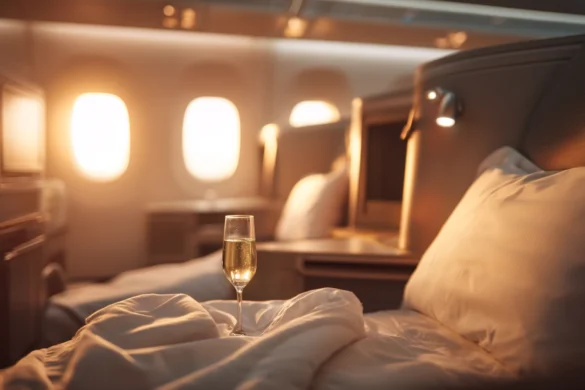
Lie-Flat Suites Now Flying to Europe
Alaska’s new lie-flat Suites business class is live as of this spring on all three European routes: Seattle to London (daily, year-round), Seattle to Rome (daily, summer) and Seattle to Reykjavik (seasonal, on a 737 MAX). This is a separate product from the domestic first class recliners in this guide and the closest Alaska gets to true international business class, and it arrives on the Seattle to Tokyo route this fall. If a lie-flat seat is what you want, book one of the 787 Dreamliner routes.

What’s new with Alaska Airlines in 2026?
If you’ve flown Alaska Airlines before, you might remember it as a reliable West Coast airline with friendly service and great legroom. That’s still true, but 2026 is a completely different ballgame. Alaska is in the middle of the biggest transformation in its history, and honestly, it’s one of the most exciting things happening in American aviation right now.
Alaska is flying to Europe for the first time
For the first time ever, Alaska Airlines is crossing the Atlantic with brand new Boeing 787 Dreamliner aircraft flying out of Seattle. All three routes are now up and running: nonstop flights to London Heathrow launched May 21 (daily, year-round), Rome launched April 28 (daily, summer seasonal) and Reykjavik, Iceland launched May 28 (summer seasonal). They’re also already flying to Tokyo and Seoul, which launched in 2025.
These Dreamliners are a totally different experience from the 737s you’re used to on domestic flights. If you’ve ever envied the international business class cabins on airlines like British Airways or Cathay Pacific, Alaska is now playing in that space. I’ll cover the Dreamliner experience in more detail later in this guide.
Free Wi-Fi is rolling out across the entire fleet
Alaska has partnered with SpaceX’s Starlink to bring ultra-fast Wi-Fi to every single aircraft in its fleet. This is a massive upgrade from the old $8 per-flight satellite Wi-Fi that was pretty hit or miss. Starlink is the same technology that’s been getting rave reviews on Hawaiian Airlines. It’s fast enough to stream Netflix, join video calls and game online at 35,000 feet.
The best part is that it will be completely free for Atmos Rewards members, which costs nothing to join. All you need is an account, and you’ll have access to Starlink Wi-Fi on every equipped flight starting in 2026, with the full fleet connected by 2027. If you’re a T-Mobile customer, you’ll get an even smoother sign-on experience with no ads.
The loyalty program has a new name and new features
If you’ve been earning miles with Alaska’s Mileage Plan, that program was replaced in September 2025 by Atmos Rewards. Don’t worry, your miles transferred over as points at a 1:1 ratio, so nothing was lost. Atmos Rewards is a combined loyalty program between Alaska Airlines and Hawaiian Airlines, which means you can now earn and redeem across both airlines and their 30+ global partners through the Oneworld alliance.
The old elite tiers you might recognize have been renamed. MVP is now Silver, MVP Gold is Gold, MVP Gold 75K is Platinum and MVP Gold 100K is Titanium. Later in 2026, Alaska is introducing something no other major airline offers: the ability to choose how you earn points. You’ll be able to pick between earning by distance flown, dollars spent or number of flights taken, and you can change your preference once a year. That flexibility is impressive and could be a game changer depending on how you travel.
More destinations than ever before
Alaska now flies to 142 destinations across seven hubs, which makes 2026 the largest network in the airline’s history. Those hubs are Seattle, Honolulu, Portland, Anchorage, Los Angeles, San Diego and San Francisco. San Diego is the fastest growing hub with 35% more flights this spring compared to last year, and Portland is picking up four new nonstop routes including Philadelphia and Baltimore. New cities on the map include Tulsa, Oklahoma and Arcata-Eureka in Northern California, and there’s expanded summer service from Anchorage to places like Boston, Boise and Spokane.
The Hawaiian Airlines merger is taking shape
Alaska completed its acquisition of Hawaiian Airlines in 2024, and in 2026 you’ll really start to see the two airlines come together. Hawaiian is joining the Oneworld alliance this spring, which means your Atmos Rewards status will be recognized at even more airlines and lounges worldwide. The booking systems are merging for travel from April 2026 onward, and cabin names are being aligned so that what Hawaiian used to call “Extra Comfort” is now “Premium Class” on both airlines.
The two brands will continue to operate separately with their own identities, so you’ll still see the Hawaiian name and Pualani logo on flights to and around the islands. But behind the scenes, everything from loyalty points to flight connections is becoming seamless. Alaska has also committed $600 million over the next five years to upgrade the Hawaiian Airlines experience, including lounge renovations in Honolulu and interior upgrades on the Airbus A330 fleet.
Seats, Wi-Fi and in-flight comfort
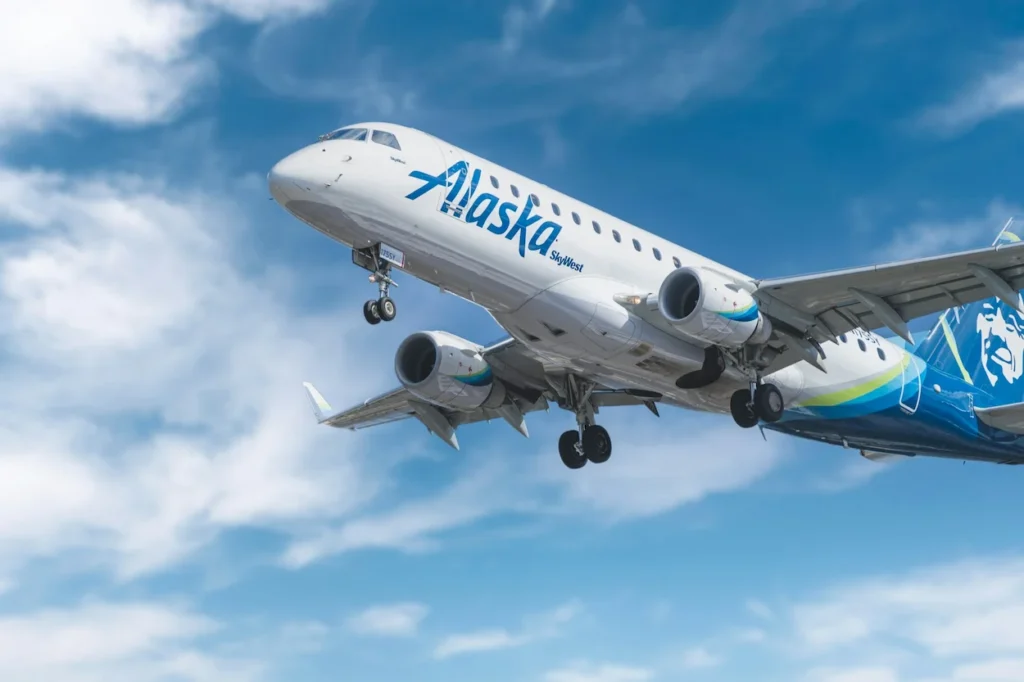
The first thing you’ll notice when you sit down in Alaska Airlines first class is the legroom. At up to 41 inches of seat pitch, Alaska offers more space than any other US domestic airline in standard (non-lie-flat) first class. The seats are arranged in a 2-2 configuration across most aircraft, so there’s no dreaded middle seat and you’ll always have either a window or an aisle.
✈️ My #1 Tip for Cheap 2026 Flights:
It’s summer, so flight prices are climbing fast - but you don't have to pay them. I’m currently seeing roundtrips to Europe for under $350 (deals you won’t find on Google Flights).
Step 1: Join Going.com's Free Plan here . It takes 10 seconds and requires no credit card.
Step 2: If you're doing a big trip this year, grab the 14-day free trial of Premium. You can even use my code JON25 for 25% off.
Seriously, this is the single best money-saving tool I’ve used in 10+ years.
👉 Send me cheap 2026 flightsThe seats themselves are custom Recaro leather recliners, and Alaska has been actively upgrading them across the fleet. If you end up on one of the refreshed 737-800s (the retrofit should be complete by summer 2026), you’ll get some nice additions including a calf rest, footrest, a 6-way adjustable headrest with neck support, a seatback device holder and USB-C charging. Older aircraft still have the standard recline with footrests, 110V power outlets and USB-A ports, which is perfectly comfortable but doesn’t feel quite as modern. Either way, every first class seat has a power outlet, so you won’t land with a dead phone.
laska doesn’t have seatback entertainment screens on its 737 fleet, which is the aircraft you’ll fly on nearly all domestic routes. Instead, you stream free movies and shows to your own phone, tablet or laptop through the onboard Wi-Fi portal. I’d recommend downloading the Alaska Airlines app before your flight and maybe loading a couple of shows onto your device just in case the connection is patchy.
Starlink Wi-Fi is a game changer
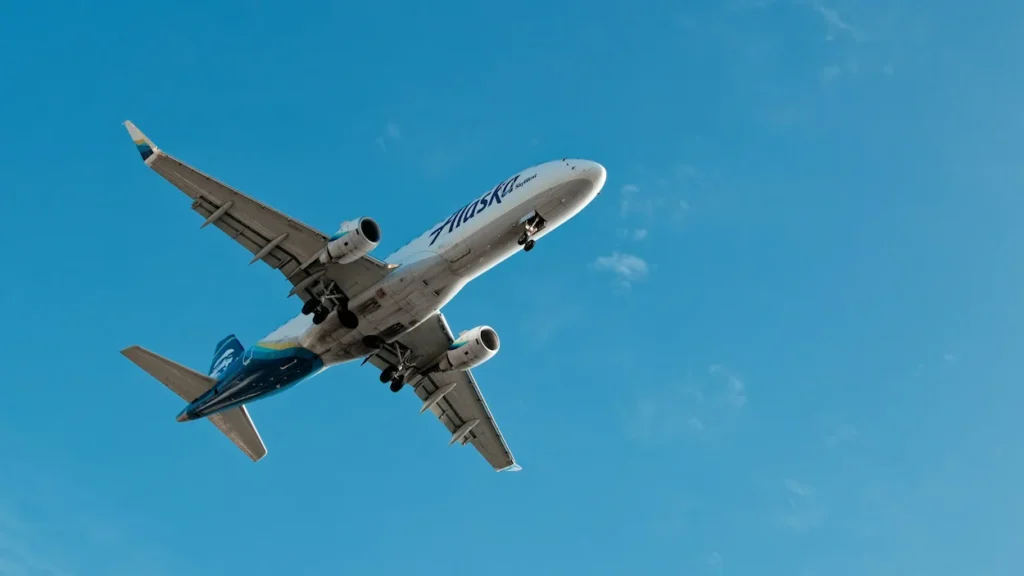
Alaska has partnered with SpaceX to roll out Starlink across its entire fleet. From everything I’ve seen so far, it’s a huge step up from the old satellite Wi-Fi that cost $8 per flight and was pretty unreliable. Starlink is already live on the A330 and A321neo aircraft, and installations on the rest of the fleet including the 737s and regional E175s are underway and running ahead of schedule. The full fleet should be equipped by 2027.
The speeds are fast enough to stream video, hop on video calls, play online games and generally use the internet the way you’re used to on the ground. And the best part is that it will be completely free for Atmos Rewards members. Signing up for Atmos Rewards costs nothing, so there’s really no reason not to create an account before you fly. If you’re also a T-Mobile customer, you’ll get an ad-free sign-on experience with some extra perks to be announced later this year.
Other details worth mentioning
Every first class passenger gets a dedicated flight attendant, which is something I genuinely appreciate on Alaska. The service tends to feel more personal and attentive than what you’ll get on the bigger legacy carriers. Flight attendants often greet you by name, remember your drink preferences and check in throughout the flight without being overbearing.
The cabin features mood lighting on newer aircraft that adjusts throughout the flights. You’ll also find overhead reading lights and individual air vents at every seat. Alaska doesn’t provide amenity kits or pillows and blankets in domestic first class (unlike some international carriers), so if you’re a cold sleeper, consider bringing a light layer.
- Read this next: 5 Proven Tips to Fly to Alaska for Cheap This Year
First class dining and drinks
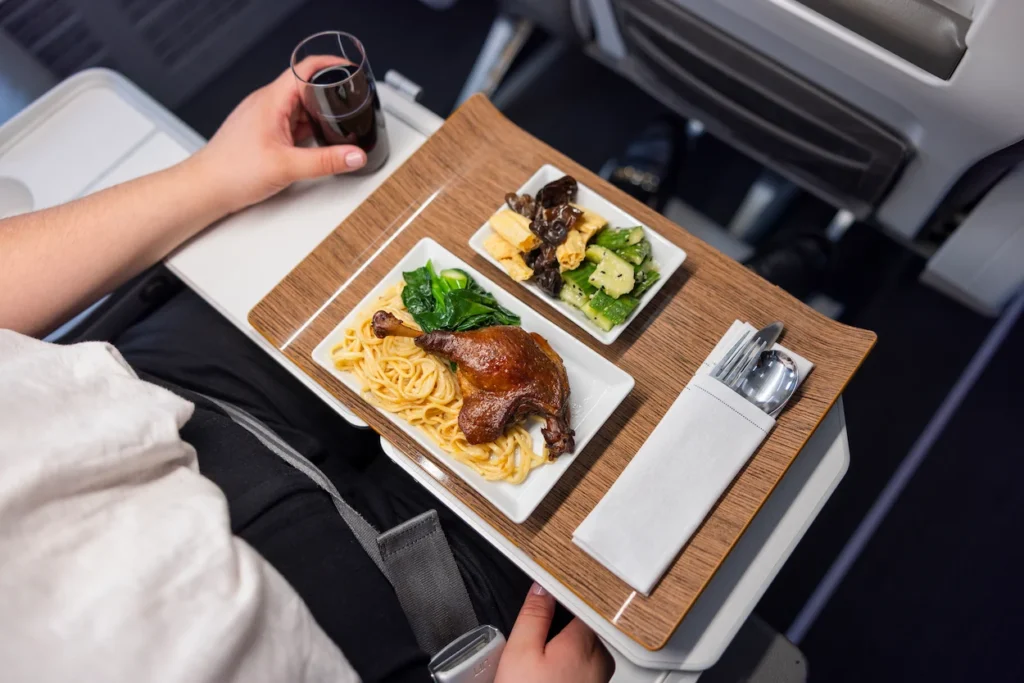
Food is one of the areas where Alaska Airlines impresses. While most US airlines don’t start serving real meals until your flight is at least 900 miles, Alaska offers freshly prepared food in first class on flights as short as 670 miles. That means even a relatively short hop from Seattle to San Francisco comes with a full meal. What you’re served depends on how far you’re flying:
| Flight distance | What you get |
| 350+ miles | Full beverage service including beer, wine and cocktails |
| 670+ miles | Light meals: sandwiches, salads, Signature Fruit & Cheese Platter |
| 1,100+ miles | Hot entrées with up to five choices |
| 2,140+ miles | Multi-course: appetizer, hot entrée, Salt & Straw ice cream, snack basket |
The Chef’s (tray) Table program
Alaska launched a dining initiative in 2025 called Chef’s (tray) Table that has elevated the food on certain transcontinental routes. The concept is straightforward: partner with celebrated West Coast chefs to design seasonal rotating menus that reflect the regions Alaska flies through. It started with Chef Brandon Jew from San Francisco’s Mister Jiu’s, whose Cantonese-inspired dishes were so popular that Alaska built an entire program around the idea.
The current featured chef on Seattle routes is Brady Ishiwata Williams, a James Beard award winner behind Seattle’s Tomo restaurant. His menu draws on his Japanese-American heritage with dishes like mochi waffle and fried chicken for breakfast and Klingemann Farms glazed short rib with stir-fried rice cakes for dinner. These are available in first class between Seattle and JFK, Newark and Reagan National.
Spring 2026 menu highlights
The latest seasonal refresh landed in February 2026 with some strong additions. New first class spring options include banana crêpes, lemon pesto spaghetti with grilled chicken and a lemongrass pork sandwich. Returning favorites like the Tillamook cheeseburger and parmesan eggs and bacon survived the rotation because passengers wouldn’t let Alaska take them off.
The biggest headline is the arrival of Beecher’s Mac & Cheese, a Seattle institution once named one of Oprah’s Favorite Things. Alaska’s culinary team spent nearly two years perfecting the onboard version, and it’s now available for pre-order across all cabins. If you haven’t tried Beecher’s before, this is handmade cheese from Pike Place Market and it’s legitimately good even at 35,000 feet.
Pre-order your meal (seriously!)
My biggest tip for first class dining on Alaska: always pre-order. You can do it through the app or website from two weeks up to 20 hours before your flight, and it takes about 30 seconds. Popular items like the Signature Fruit & Cheese Platter and the Beecher’s Mac & Cheese run out fast if you wait to order on board.
On the drinks side, everything is complimentary in first class. You’ll find West Coast wines, local craft beers, Stumptown coffee from Portland and a range of spirits and cocktails. On Hawaii and Latin America flights, there are canned cocktails from Straightaway including an espresso martini, old fashioned and margarita.
Alaska Airlines lounges and the ground experience
If you’re flying first class on a longer route, one of the perks is access to Alaska’s lounges before your flight. They’re not the sprawling international affairs you’ll find with Emirates or Singapore Airlines. But they’re well designed, comfortable and have a distinctly Pacific Northwest personality. This is where you’ll find Alaska Lounges as of 2026:
| Airport | Location | Notes |
| Seattle (SEA) | Concourse C, D, and North Satellite | Three lounges, North Satellite is the flagship |
| Portland (PDX) | Concourse B (express) and Concourse C | Brand new 13,000 sq ft lounge opening in 2026 |
| Anchorage (ANC) | Concourse C, near gate C-1 | Recently renovated, doubled to 140 seats |
| Los Angeles (LAX) | Terminal 6 | Mezzanine level near gate 64 |
| San Francisco (SFO) | Terminal 1 | Across from gate B6 |
| Honolulu (HNL) | The Plumeria Lounge | Added through Hawaiian Airlines merger |
Note: The JFK lounge closed in October 2025 as Alaska relocates its operations to Terminal 8. A massive new 13,000 square foot lounge in San Diego is also in the works, with construction expected to begin in early 2027.
What to expect inside
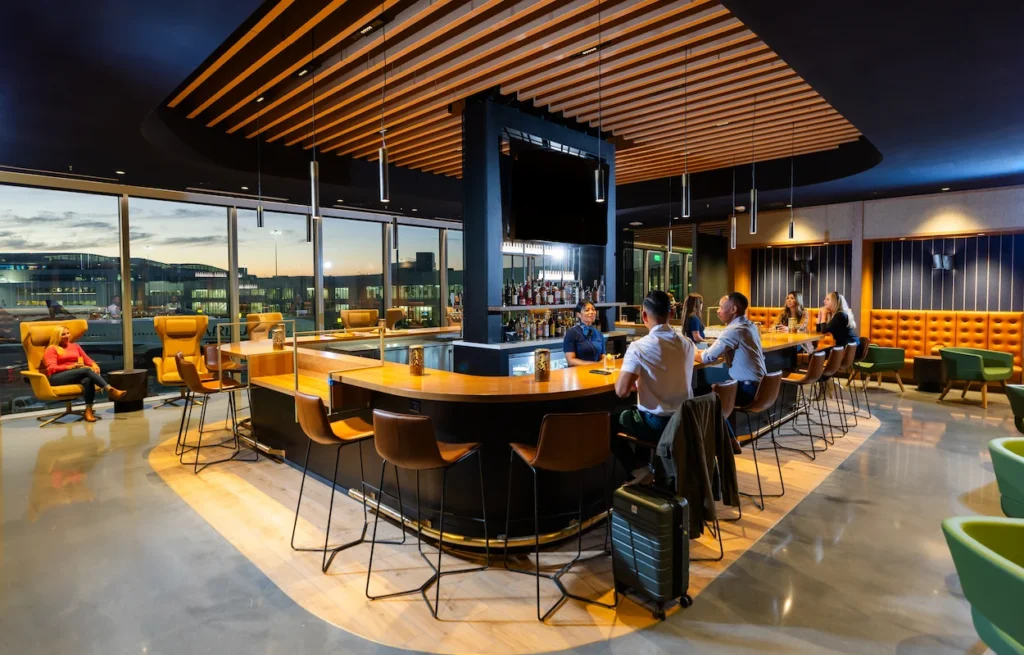
Alaska’s lounges lean into the Pacific Northwest aesthetic with rustic wood accents, leather seating and fireplaces at select locations. The food is a step above what you’ll find at many domestic airline lounges, with rotating breakfast items like pancakes and oatmeal in the morning and soups, salads and snack spreads throughout the day. Don’t expect full restaurant-style meals, but you won’t go hungry either.
On the drinks side, you’ll find complimentary West Coast wines, local craft beers, house spirits and hand-crafted espresso drinks. All lounges have free Wi-Fi, plenty of power outlets and workstations. Some locations like Anchorage, Los Angeles, Portland and Seattle also offer private conference rooms you can reserve for $25 per hour as a member. The North Satellite lounge in Seattle is the standout in the network if you have a choice, with 15,000 square feet of space and great runway views.
How to get in with a first class ticket
This is where it gets a little tricky and is worth understanding before you assume your first class ticket gets you through the door. Lounge access is only complimentary if you’re on a paid or award first class ticket where at least one flight in your itinerary is over 2,000 miles. That covers coast-to-coast flights, Hawaii routes and international itineraries, but it cuts out a lot of shorter domestic routes.
If your flight is under 2,000 miles, you can still purchase a single-entry day pass for $35, subject to availability. If you were upgraded to first class, whether it was a complimentary upgrade through elite status, a paid upgrade or an upgrade with miles, you do not get lounge access. Only paid and award first class tickets qualify. Alaska residents enrolled in the free Club 49 program are an exception and can access lounges on any first class ticket to, through or from Alaska regardless of distance.
If you fly Alaska regularly and want guaranteed lounge access, the Alaska Lounge membership runs $595 per year, or $795 for Lounge+ which adds access to nearly 90 partner lounges worldwide including American Airlines Admirals Clubs and Qantas Clubs. You can save $100 on the Lounge+ membership with an eligible Atmos Rewards credit card or by hitting the 30,000 status point milestone.
Priority check-in and boarding
First class passengers get dedicated check-in lanes and priority boarding at the gate. Alaska has also been rolling out new self-service technology at airports, starting with Portland’s renovated terminal. Their goal is to get you from the lobby through security in five minutes or less using automated bag tag stations and bag drop kiosks. If you have TSA PreCheck, you’ll move through security even faster. Alaska now supports the TSA PreCheck Touchless ID Program at participating airports.
The 787 Dreamliner: Alaska’s new international premium cabin
Until recently, Alaska Airlines was a domestic airline. You flew them up and down the West Coast, maybe to Hawaii, and that was about it. That’s changed in a big way. In 2026, Alaska launched its first European routes on brand new Boeing 787 Dreamliner aircraft, and the onboard experience is nothing like what you’ll find on their domestic flights.
The business class cabin on the 787 has 34 enclosed suites with fully lie-flat beds, privacy doors and 18-inch seatback screens. Every seat has direct aisle access, wireless charging and plenty of room to actually sleep on an overnight flight. I want to be clear here because it can be confusing: this is a completely separate product from the domestic first class recliners I described earlier in this guide. Think of it as two different airlines under one roof.
Where the 787 flies
| Route | Frequency | Start date |
| Seattle to London Heathrow | Daily, year-round | May 21, 2026 |
| Seattle to Rome | Daily, summer seasonal | April 28, 2026 |
| Seattle to Tokyo Narita | Daily, year-round | Already flying |
| Seattle to Seoul Incheon | 5x weekly, year-round | Already flying |
Alaska also launched a seasonal route to Reykjavik, Iceland on May 28. However, that one uses a 737 MAX 8 rather than a Dreamliner, so you won’t get the lie-flat experience on that flight. More international destinations are expected over the next few years as the Dreamliner fleet grows to as many as 17 aircraft.
The 787 doesn’t have a true premium economy cabin yet. There are Premium Class seats with extra legroom and complimentary drinks, but they’re closer to economy-plus than the standalone premium economy you’ll find on Delta or United long-haul flights. Alaska has said a proper premium economy product is coming, but probably not until 2028.
✈️ How I’d actually book one of those new 787 lie-flat seats to Europe
Alaska’s Seattle to London and Rome business class suites are gorgeous, but they list at eye-watering prices most of the year. I’ve watched transatlantic business fares drop 40-60% out of Seattle through Going Elite, and on the domestic side I caught a first class Alaska ticket for hundreds less than the standard fare last year. It only takes one alert to make back the membership.
Try Going Elite free for 14 days — use code JON25 for 25% off if you keep it.
Alaska Airlines first class vs. premium class
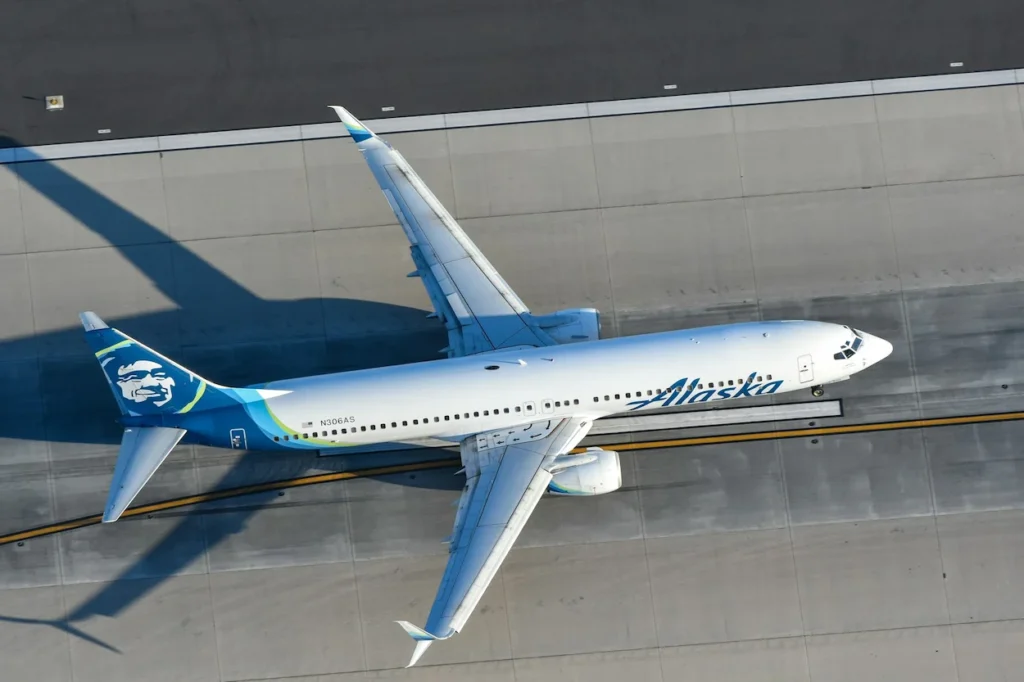
Alaska offers three cabin options on most domestic flights: Main Cabin, Premium Class and First Class. The jump from Main Cabin to Premium Class is relatively small. The jump from Premium Class to First Class is where things change significantly. Here’s how they compare.
| First Class | Premium Class | |
| Seat pitch | Up to 41″ | ~35-36″ (4″ more than Main Cabin) |
| Seat layout | 2-2 | 3-3 |
| Free checked bags | Two, up to 50 lbs each | None (same as Main Cabin) |
| Complimentary meals | Yes, on flights over 670 miles | No (available for purchase) |
| Complimentary drinks | Full bar on flights over 350 miles | Full bar on flights over 350 miles |
| Dedicated flight attendant | Yes | No |
| Lounge access | On qualifying tickets | No |
| Priority boarding | Yes | Yes (boards with First Class) |
| Upgrade price | Starting at $39 | Starting at $15 |
The free drinks in Premium Class are the same as First Class. It’s surprisingly good value on shorter flights where you wouldn’t get a meal in First Class anyway. If you’re flying a two or three hour route and you mainly want a little extra space and a complimentary glass of wine, Premium Class gets you most of the way there for a fraction of the cost.
Where First Class really earns its price is on longer flights. Once you’re over 670 miles and meals come into play, the experience gap widens considerably. You get a proper meal, a dedicated flight attendant who’s focused on just 16 passengers, two free checked bags and a much wider seat in a 2-2 layout where you’re never stuck in a middle seat. On a five-hour coast-to-coast flight, I think First Class is absolutely worth it. On a 90-minute hop from Seattle to Portland, Premium Class is probably the smarter spend.
- You may also enjoy: The Cheapest Ways to Fly to Alaska (from Continental US)
How to book Alaska Airlines first class for less
You don’t always have to pay full price for a first class ticket. There are several ways to get into the cabin for less than the sticker price. Trust me, some of these are surprisingly accessible even if you’re not a frequent flyer.
Buy an upgrade instead of a full ticket
The next simplest approach is to book a Main Cabin ticket and then upgrade later. Alaska opens paid upgrades to first class starting 24 hours before departure, and prices can start as low as $29 depending on the route and availability. You can check for upgrade pricing through the Alaska app, website or at an airport kiosk up to 50 minutes before your flight. I’d recommend checking the app the day before your flight because the best upgrade deals tend to appear right when that 24-hour window opens.
Use Atmos Rewards points
If you’ve been collecting points through Alaska’s Atmos Rewards program, you can book first class award tickets starting at just 4,500 points for shorter one-way flights. That’s one of the lowest award thresholds of any airline loyalty program in the US, and it makes short domestic hops in first class remarkably affordable if you have even a modest points balance. Longer flights will cost more, but the value is still strong compared to what you’d pay out of pocket.
Earn elite status for complimentary upgrades
All four Atmos Rewards elite tiers (Silver, Gold, Platinum and Titanium) are eligible for complimentary first class upgrades when space is available. You’re placed on a waitlist and upgrades clear based on your status level, fare class and when you booked. Higher tiers clear first, so Titanium members have the best odds, but even Silver members get upgraded on less busy routes and off-peak travel days. Each elite tier also receives four one-way guest upgrade certificates per year, which you can use to upgrade a travel companion.
Use the Oneworld alliance
Alaska is a member of the Oneworld alliance, which means elite status you earn with Alaska is recognized across partner airlines like American Airlines, British Airways, Cathay Pacific, Japan Airlines and Qantas. The reverse is also true. If you have status with any Oneworld carrier, you may be eligible for upgrades and lounge access when flying Alaska. This is especially valuable if you fly a mix of domestic and international routes across different airlines.

Global Viewpoint is a personal blog. All content is for informational and entertainment purposes only and does not constitute professional financial, medical, or legal advice.